In partnership with

Good morning ☀️, leader of the next generation.
Sometimes we give technology too much credit or too much blame.
The truth is, it’s a tool. How we use it is what matters.
Used with purpose, it helps us see more clearly, build faster, and express ourselves in new ways.
It’s not about chasing trends. It’s about creating something real.
WHAT'S AT STAKE TODAY ⚡
- 🛍️💰 Black Friday sets online spending record of $11.8B, Adobe says
- 🤖🎂 ChatGPT launched three years ago today
- 📊💼 New report examines how David Sacks might profit from Trump administration role
- 🎬😱 'Avatar' director James Cameron says generative AI is 'horrifying'
- 🎓🤖 How student AI use is changing teaching at UofT
- 🧵🔍 Threads Experiments With AI Interaction Summaries on Profiles
Infrastructure startups capitalize as AI coding transforms development landscape
Supabase CEO on the "painful" decisions that built a $5B company

The artificial intelligence revolution in software development is creating massive opportunities not just for the AI coding platforms themselves, but for the infrastructure companies powering them behind the scenes. This trend has become particularly evident as "vibe coding" – an intuitive, AI-assisted approach to development – gains momentum across the tech industry.
While consumer-facing AI development platforms like Lovable and Replit capture headlines with their innovative coding assistance tools, the companies providing the essential backend infrastructure are experiencing their own windfall. These infrastructure providers, including database and cloud service companies, are seeing unprecedented demand as AI-powered development accelerates.
Supabase, the open-source Firebase alternative that has grown into a $5 billion company, represents a prime example of this infrastructure boom. The company's success story offers valuable insights into how strategic, sometimes difficult business decisions can position a startup to capitalize on major technology shifts like the AI coding revolution.
The rise of vibe coding has fundamentally changed how developers approach software creation. Instead of wrestling with complex configurations and setup processes, developers can now focus on their creative vision while AI handles much of the technical heavy lifting. This shift has created enormous demand for reliable, scalable infrastructure that can support rapid development cycles and instant deployment.
For infrastructure companies like Supabase, this represents both an opportunity and a challenge. The opportunity lies in serving the growing number of developers who need robust backend services to support their AI-assisted projects. The challenge comes in scaling to meet this unprecedented demand while maintaining the performance and reliability that developers expect.
The success of infrastructure companies in this new landscape often comes down to making strategic decisions that may seem counterintuitive or painful in the short term but position the company for long-term growth. These decisions might include investing heavily in scalability before it's immediately necessary, turning down certain customer requests to maintain focus, or choosing open-source approaches that prioritize community building over immediate revenue.
The vibe coding phenomenon extends beyond just individual developers experimenting with AI tools. Enterprise adoption is accelerating as companies recognize the productivity gains possible when their development teams have access to AI-assisted coding platforms backed by reliable infrastructure. This enterprise shift represents a significant revenue opportunity for infrastructure providers who can demonstrate enterprise-grade reliability and security.
Industry observers note that the current wave of AI coding adoption differs from previous development trends in its speed and scope. Rather than gradually replacing existing tools and workflows, vibe coding is creating entirely new categories of applications and use cases. This rapid expansion creates sustained demand for infrastructure services, rather than the boom-and-bust cycles often seen with other tech trends.
The implications extend beyond just financial success for infrastructure companies. As AI coding becomes more mainstream, the infrastructure decisions made today will shape the development landscape for years to come. Companies that can successfully balance rapid scaling with maintaining developer-friendly experiences are likely to emerge as the long-term winners in this space.
For entrepreneurs and investors watching this space, the lesson is clear: while AI coding platforms grab attention, the infrastructure layer presents equally compelling opportunities. The key is identifying companies that have made the strategic decisions necessary to capitalize on this unprecedented wave of demand in software development infrastructure.
From Hype to Production: Voice AI in 2025

Voice AI has crossed into production. Deepgram’s 2025 State of Voice AI Report with Opus Research quantifies how 400 senior leaders - many at $100M+ enterprises - are budgeting, shipping, and measuring results.
Adoption is near-universal (97%), budgets are rising (84%), yet only 21% are very satisfied with legacy agents. And that gap is the opportunity: using human-like agents that handle real tasks, reduce wait times, and lift CSAT.
Get benchmarks to compare your roadmap, the first use cases breaking through (customer service, order capture, task automation), and the capabilities that separate leaders from laggards - latency, accuracy, tooling, and integration. Use the findings to prioritize quick wins now and build a scalable plan for 2026.
AI transforms traditional startup sales and marketing approaches
How OpenAI and Google see AI changing go-to-market strategies

AI is revolutionizing how startups approach go-to-market strategies, enabling teams to accomplish more with fewer resources. While traditional marketing expertise remains crucial, AI allows for unprecedented personalization and precision in lead generation and qualification.
Google Cloud's Alison Wagonfeld emphasizes that marketing fundamentals still matter, but AI accelerates execution and enables more holistic metric tracking. OpenAI's Marc Manara notes AI tools now provide sophisticated lead building and inbound marketing capabilities far beyond simple database queries, allowing startups to find highly specific prospective customers with greater accuracy than ever before.
🎙️ NEW EPISODE DROP:
Inventing the Future with Pablos Holman
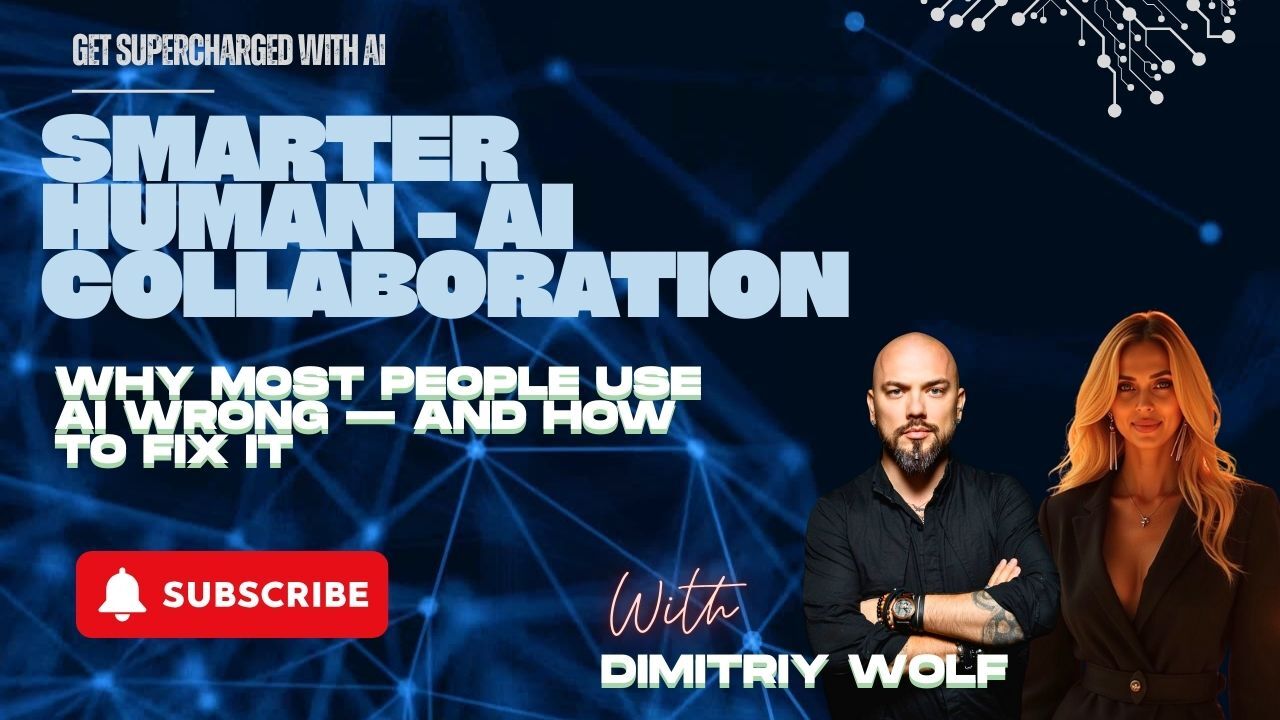
I sat down with Pablos Holman — hacker, inventor, futurist, and founder of Deep Future — for one of the most mind-expanding conversations I’ve ever had.
We talked about using AI to solve real problems, what most entrepreneurs get completely wrong, and how Pablos has spent his career inventing the tools of tomorrow — from laser-powered mosquito killers to nuclear reactors powered by waste.
If you care about the future, technology, or building what others say is impossible — this episode is for you.
⚡ Trends for the Future
The race to regulate AI has sparked a federal vs state showdown

Tech industry pushes federal preemption over state AI regulations.
Washington is approaching its first major decision on artificial intelligence regulation, but the biggest battle isn't about the technology itself—it's about who gets to control the rules. With no meaningful federal AI safety standards in place, states have stepped up with dozens of protective measures, including California's AI safety bill SB-53 and Texas's Responsible AI Governance Act.
Tech giants and Silicon Valley startups are pushing back hard, arguing that state-by-state regulations create an unworkable patchwork that stifles innovation and weakens America's competitive position against China. The industry is lobbying for either a single national standard or no regulation at all.
House lawmakers are reportedly attempting to use the National Defense Authorization Act to block state AI laws, while a leaked White House executive order draft reveals plans for an "AI Litigation Task Force" to challenge state regulations in court. The proposed order would give Trump's AI and Crypto Czar David Sacks significant authority over creating uniform legal frameworks that override state rules.
Pro-AI super PACs have emerged as major players, with Leading the Future raising over $100 million from backers like Andreessen Horowitz and OpenAI. They've launched a $10 million campaign pushing Congress to craft federal AI policy that preempts state laws, arguing that local lawmakers lack technical expertise.
However, sweeping preemption faces strong opposition. More than 200 lawmakers signed a letter opposing the NDAA provision, while nearly 40 state attorneys general also objected to blocking state regulations. They argue that without federal standards in place, preemption would leave consumers exposed to AI-related harms.
Representative Ted Lieu is preparing a comprehensive federal AI bill covering fraud, healthcare, transparency, and safety issues. As of November 2024, 38 states have already adopted over 100 AI-related laws, demonstrating their ability to move faster than federal lawmakers. The outcome of this federal versus state battle will determine how America approaches AI governance in the coming years.

⚡ You’re Smart. Strategic. Intentional. So Let’s Be Real:
Where Are You Holding Back— On Purpose?
Every smart operator has something they’re intentionally avoiding.
Not because they’re lazy — but because it’s risky, unknown, or just... a bit *uncomfortable*.
So what’s that thing for you?
That one decision, move, or experiment you know would push you forward — but you’ve been choosing not to do it.
Tell us — and we’ll share a tactical POV or tool to help you rethink it.
No fluff. Just momentum.

AI will be humanity's most powerful collaborative tool, amplifying our collective intelligence to achieve breakthroughs that seemed impossible just years ago.
Patrick Collison is the co-founder and CEO of Stripe, the financial infrastructure company that has revolutionized online payments and enabled millions of businesses to operate on the internet. As a young entrepreneur and technologist, he has been a thoughtful voice on how emerging technologies can accelerate economic growth and innovation while advocating for policies that support technological progress and global prosperity.
🎬 How to Use AI Agents to Build High-Converting Video Ads
Build once. Scale everywhere. In just minutes.
What if: Instead of spending weeks scripting, editing, and testing ads… you could build 10 variations of a high-converting video in 15 minutes — with agents handling the voiceover, visuals, call-to-action, and even the hook testing?
That’s exactly what we’ll show you this week — live.
Why This Changes Everything for Founders 🧠
- 🎥 Fast-Track Ad Creation: From idea to launch-ready video in under an hour — no team needed.
- 🔁 Test Like a Pro: Run A/B tests on 10 hooks, CTAs, or visuals — while you sleep.
- 💰 Better ROAS, Less Guessing: Let agents learn what your audience *actually* responds to.
- 📦 Works for Any Product: Digital or physical — agents adapt to your niche & brand voice.
📅 Join the Live Session w code Supercharged
We’ll walk you step-by-step through building your own ad-generating agent — no code needed.
👉 Click here to save your seat for the webinar
You’ll leave with a working prototype, free templates, and 5x more speed in your next ad campaign.
🎁 Bonus for Attendees:
- ✅ AI Agent Template for Ad Generation
- ✅ "Top 10 Hooks That Convert" Prompt Pack
- ✅ Entry to win a Free AI Strategy Audit
🌡️ Use the Satisfaction Thermometer to show us how much you enjoyed The Supercharged today ;)

The Supercharged is aiming to be the world's #1 AI business magazine and is on a mission to empower 1,000,000 entrepreneurs worldwide by 2025, guiding them through the transition into the AI-driven creative age. We're dedicated to breaking down complex technologies, sharing actionable insights, and fostering a community that thrives on innovation, to become the ultimate resource for businesses navigating the AI revolution.
The Supercharged is the #1 AI Newsletter for Entrepreneurs, with 25,000 + readers working at the world’s leading startups and enterprises. The Supercharged is free for the readers. Main ads are typically sold out 2 weeks in advance. You can book future ad spots here.
I'm sending this email because you registered for one of our workshops or our affiliates brought you. You can unsubscribe at the bottom of each email at any time.
