In partnership with

4x your communication output. Same quality. No burnout.

The bottleneck isn't what you want to say — it's how long it takes to type it. Wispr Flow removes the bottleneck.
Speak naturally and get polished, send-ready text for executive summaries, client updates, board recaps, investor notes, or just the 30 Slack messages you're behind on. Flow strips filler, formats numbers and lists, and preserves your tone.
Used by teams at OpenAI, Vercel, and Clay. 89% of messages sent with zero edits. Works in every app on Mac, Windows, and iPhone.
Good morning ☀️, leader of the next generation.
We will talk about agents. AI agents.
They will change the way how we do business, how we interract and even how we do our everyday lives.
Agents will build business.
Agents will organize your day.
Agents will fill up your fridge.
I will let that sit in here for a while, so we can imagine and build the future together one agent at a time...
WHAT'S AT STAKE TODAY ⚡
- SpaceX falls to $135 IPO price ahead of Starship launch 🚀
- Why AMI Labs' Alexandre LeBrun won't call his AI 'AGI' or 'superintelligence' 🤐
- Microsoft is reportedly training salespeople to talk down OpenAI and Anthropic 🗣️
- Microsoft patches record number of security vulnerabilities, citing its use of AI 🛡️
- Whatnot acquires Shaped to power real-time live shopping recommendations 🛒
- Hack suggests AI music generator Suno scraped YouTube for training data 🎵
- Applied Computing wants to give oil and gas operators an AI model for the entire plant 🏭
- Apple Intelligence approved for launch in China with Alibaba and Baidu 🍎
What’s your #1 financial headache as a business owner?
SpaceX shares slip back to IPO price as Starship test looms.
SpaceX falls to $135 IPO price ahead of Starship launch

SpaceX shares tumbled back to their IPO price of $135 on Wednesday, just over a month after the company's high-profile public debut raised nearly $86 billion. The stock spent a good portion of the day trading below that threshold, briefly sinking to $133, before recovering slightly to close at $135.27.
The drop marks a stark contrast to the euphoria that surrounded SpaceX's June 12 IPO. In the days following its market debut, shares surged past $200, briefly pushing the company's valuation into territory that rivaled tech heavyweights like Amazon and Microsoft. Since hitting that peak, however, the stock has shed value almost every week.
Part of the turbulence can be explained by the structure of the offering. Only 4% of SpaceX's total shares are currently trading on the Nasdaq — a small "float" that, combined with intense and constant public interest in the company, has led to significant price swings in its first weeks as a public company.
Beyond the technical factors, investor enthusiasm for CEO Elon Musk's ambitious vision appears to be cooling. This reflects a broader pullback in tech stocks over the past month. It's not just SpaceX's share price that is under pressure — bonds the company issued following its IPO are also declining in value.
A sustained downturn could carry consequences beyond SpaceX itself. The company's stock performance is seen as a barometer for how investors feel about transformative, long-term bets in the tech and space sectors. SpaceX's IPO was also viewed as paving the way for other major players — most notably Anthropic and OpenAI — to make their own public market debuts. Both companies have reportedly filed confidential IPO paperwork, and while neither has announced a specific date, Wall Street is watching SpaceX closely as a bellwether for how those listings might perform.
The pressure on SpaceX's stock is set to intensify further. On Thursday, the company is scheduled to conduct a test launch of its Starship rocket — its first since going public. Starship remains a work in progress, and SpaceX has built its development philosophy around accepting setbacks as part of the process. The company's so-called "fly, fail, fix" approach means failures are not just possible, they are somewhat expected.
The upcoming test will be Starship's first flight since a booster failure occurred in May. Notably, SpaceX has chosen not to attempt recovery of either the booster or the upper stage during this mission. Instead, both components will be directed to simulate a landing in the Gulf of Mexico — meaning they will end in a controlled explosion regardless of how the rest of the flight goes. Even a technically successful mission will conclude with both parts of the rocket system being destroyed.
For investors already on edge about the stock's recent decline, a high-profile rocket test that ends in a fireball — planned or not — could make for a nervy few days on the market. How SpaceX and its share price weather this early test may say a lot about the long-term confidence investors are willing to place in Musk's vision for the stars.
Go from AI overwhelmed to AI savvy professional

AI will eliminate 300 million jobs in the next 5 years.
Yours doesn't have to be one of them.
Here's how to future-proof your career:
Join the Superhuman AI newsletter - read by 1M+ professionals
Learn AI skills in 3 mins a day
Become the AI expert on your team
Which of these would help your business the most right now?
AMI Labs CEO rejects AI buzzwords, bets on world models and physical intelligence.
Why AMI Labs' Alexandre LeBrun won't call his AI 'AGI' or 'superintelligence'

AMI Labs CEO Alexandre LeBrun refuses to use terms like "AGI" or "superintelligence," calling them undefined and unhelpful. Instead, his startup — co-founded with Turing Award winner Yann LeCun — focuses on world models, AI systems that understand physical reality, not just language.
LeBrun sees robotics, manufacturing, and healthcare as key targets, arguing LLMs alone can't handle the real world. He's actively courting partners in South Korea, drawn by its industrial strength and fast adoption culture. AMI has raised $1.03 billion but has no product yet. "We'll make a surprise when we're ready," he said.
🎙️ The Supercharged Podcast Is Growing
Real Conversations with the People Building the AI Future

The Supercharged Podcast is quickly becoming a space for real, unfiltered conversations about AI — beyond the hype, tools, and surface-level takes.
Each episode dives deep with founders, operators, and builders who are actively working with AI — or building AI-first companies — to uncover how it’s truly changing the way work gets done.
From strategy and systems to real-world execution, these conversations are practical, honest, and focused on what actually works — not just what sounds good.
⚡ Trends for the Future
Microsoft is reportedly training salespeople to talk down OpenAI and Anthropic
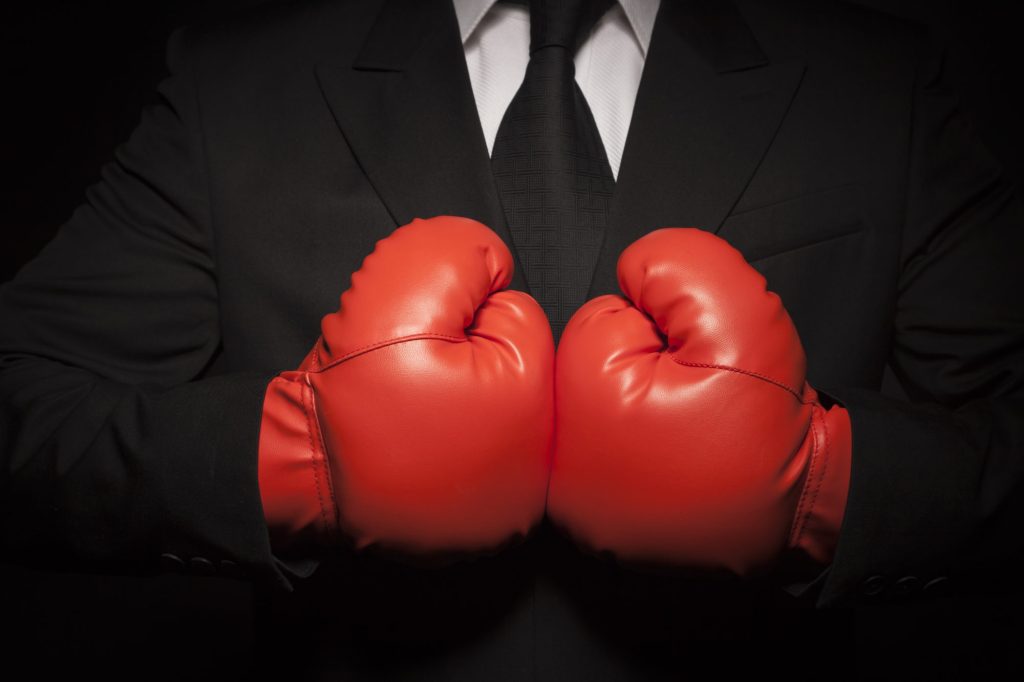
Microsoft coaches its sales team to pitch its AI over rivals like OpenAI and Anthropic.
Microsoft is sharpening its elbows in the AI market, and it's starting with its own sales force. At an internal meeting held Tuesday, company executives laid out a strategy for the new fiscal year that includes directly positioning Microsoft's in-house AI products against those of competitors like OpenAI, Google, and Anthropic — and not in a flattering way for the rivals.
Executive Vice President Jay Parikh set the tone at the meeting, telling the room that Microsoft's advantage lies in offering a complete, integrated system rather than isolated components. "Everyone else is selling parts — we're selling the full end-to-end system. That's the story that we all need to get out there and tell in FY27," he reportedly said.
Copilot Executive Vice President Jacob Andreou went even further, delivering a presentation that put Anthropic's Claude chatbot in a particularly unflattering light. He reportedly argued that, when used within Microsoft's office applications, Claude was slower, less accurate, and lacked the necessary security integrations compared to Microsoft's own Copilot.
What makes this notable isn't the competitive posturing itself — that's standard corporate playbook. What stands out is the target. Microsoft has historically leaned heavily on both OpenAI and Anthropic to power its own products. That relationship, however, appears to be shifting. Earlier reports revealed that Microsoft has been quietly replacing OpenAI and Anthropic models in flagship apps like Word and Excel with its own internally developed models, largely as a cost-cutting measure.
The evolution of Microsoft's relationship with OpenAI tells a big part of this story. The two companies had a uniquely close partnership, with Microsoft providing capital and compute in exchange for exclusive API access. That exclusivity clause was dropped in April, freeing OpenAI to work with Microsoft's direct competitors — and seemingly freeing Microsoft to start treating OpenAI as one too.
With investors watching Microsoft's heavy AI spending closely, the company appears eager to prove that its internal AI capabilities are worth the investment — even if that means distancing itself from the partners that helped get it there.

⚡ Let’s Make AI Actually Useful:
What Would Move the Needle in *Your* Industry?
AI has potential — but generic advice rarely helps.
What would be genuinely valuable for AI to do in your industry right now?
• Automate a painful workflow?
• Improve decision-making?
• Replace a manual process that wastes time?
• Help your team upskill faster?
Tell us what you’d want AI to handle — or where you feel stuck.
We’re using these insights to curate **industry-specific trainings, live webinars, and practical guidance** you can actually apply.
🌡️ Use the Satisfaction Thermometer to show us how much you enjoyed The Supercharged today ;)

The Supercharged is aiming to be the world's #1 AI business magazine and is on a mission to empower 1,000,000 entrepreneurs worldwide by 2026, guiding them through the transition into the AI-driven creative age. We're dedicated to breaking down complex technologies, sharing actionable insights, and fostering a community that thrives on innovation, to become the ultimate resource for businesses navigating the AI revolution.
The Supercharged is the #1 AI Newsletter for Entrepreneurs, with 25,000 + readers working at the world’s leading startups and enterprises. The Supercharged is free for the readers. Main ads are typically sold out 2 weeks in advance. You can book future ad spots here.
I'm sending this email because you registered for one of our workshops or our affiliates brought you. You can unsubscribe at the bottom of each email at any time.
