In partnership with

[Webinar] 8 levels of context maturity in AI-native engineering

AI is in your engineering workflow. While the token spend shows it, the throughput doesn't. The human is very much still in the loop, and that's a context problem.
Join live July 23 (FREE) to learn:
The 8 levels of context maturity: where most teams are stuck and what the ceiling looks like at each stage
Why more MCPs, rules, and skills provide agents access but not understanding
How leading engineering teams are using a context engine to make the most of their agents
Good morning ☀️, leader of the next generation.
We will talk about agents. AI agents.
They will change the way how we do business, how we interract and even how we do our everyday lives.
Agents will build business.
Agents will organize your day.
Agents will fill up your fridge.
I will let that sit in here for a while, so we can imagine and build the future together one agent at a time...
WHAT'S AT STAKE TODAY ⚡
- Should AI help you get away with killing your spouse? 🔪🤖
- Waze adds new AI-powered features and customization updates 🗺️✨
- Hermes agent maker Nous Research in talks for new funding at $1.5B valuation 💰🦾
- Anthropic starts localizing Claude pricing for India, its biggest market after the US 🇮🇳💡
- The wildest allegations in Apple's trade secrets lawsuit against OpenAI 🍎⚖️
- Satya Nadella has issued a shocking warning to companies using AI ⚠️🤖
- Already rich, already successful, why the last wave of tech winners is grinding again 💻🔄
- Video-generation startup PixVerse raises $439M, valuation soars past $2B 🎬🚀
- Uber's product chief on hotels, robotaxis, and why the company doesn't want to be "everything for everyone" 🚗🏨
What’s your #1 financial headache as a business owner?
The debate over user-aligned AI and how far personal freedom should go.
Should AI help you get away with killing your spouse?
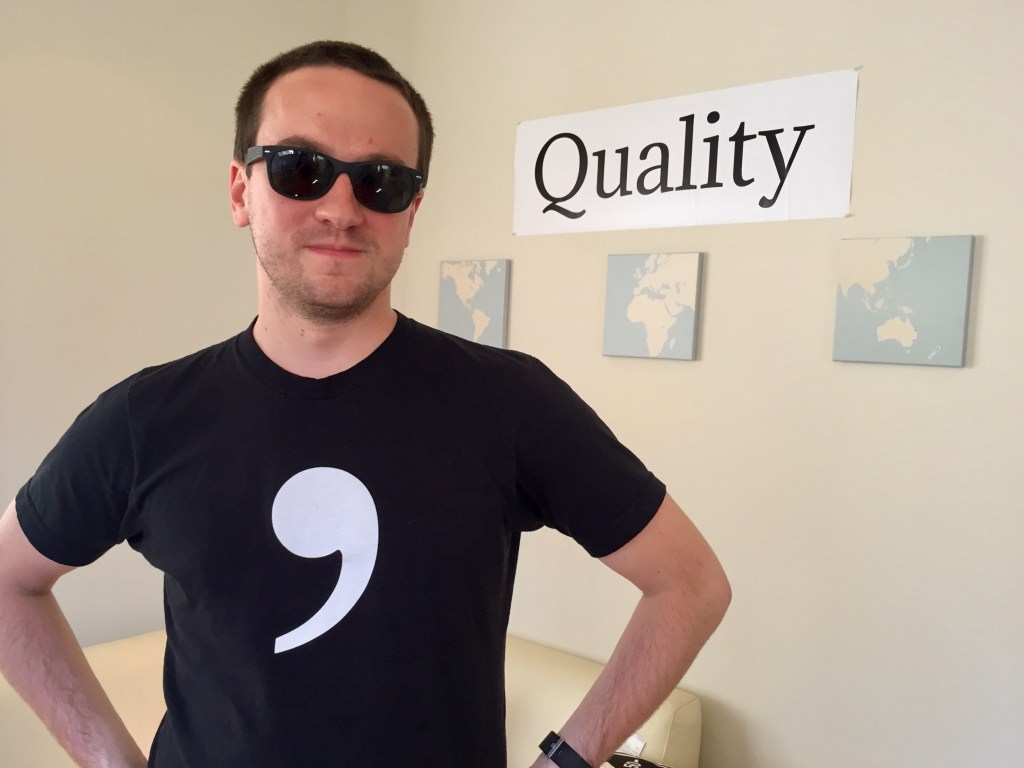
Here's a quick question: Should AI be trained well enough to help someone plan the perfect murder of their spouse? For most people, that's an easy no. Not exactly a hard call.
But not everyone sees it that way. Comma AI founder and notorious provocateur George Hotz recently stirred up the AI debate with a post challenging mainstream thinking on AI alignment and safety. His comments came in response to the AI 2040: Plan A policy paper from the AI Futures Project, which proposes that the world's researchers voluntarily slow down AI development for 14 years for the collective benefit of humanity.
Hotz isn't buying it. He pushes back hard on the idea that AI progress should be managed for the greater good, and he also argues that the so-called fast-takeoff scenario — where AI rapidly develops superhuman capabilities — doesn't hold up to scrutiny. On those points, he actually makes some reasonable arguments worth considering.
Where Hotz really goes off the rails, though, is in his vision of what truly "user-aligned" AI should look like. He compares it to a gun — a tool that doesn't complain or ask questions about how you use it. In his ideal world, a properly aligned AI would help you order meth-lab equipment and walk you through using it, no questions asked. He even claims he would die defending this principle, though it's difficult to imagine exactly how that scenario would play out.
There's actually something worth salvaging in the broader idea. Much of today's AI is built around large, centrally managed services like ChatGPT and Claude. That's partly due to the enormous cost of running cutting-edge models, and the fact that most users don't interact with AI frequently enough to justify a truly personal, locally hosted system. But as the technology matures, those barriers will shrink. The appeal of a more personal, locally controlled AI — one that genuinely works for you rather than for a corporation — is real and exciting.
The problem is that Hotz frames this entirely as a freedom issue, with no room for nuance. "We either live in a world with freedom or we don't," he writes. Freedom sounds great, obviously. But any functioning society involves more than just individual freedom — it requires balancing competing interests, maintaining accountability, and recognizing that your choices affect other people.
Anyone building mass-market technology products has to think about that broader picture. That includes taking seriously the interests of, say, the as-yet-unharmed spouses and family members of the world. An AI that cheerfully assists with any request, no matter how harmful, isn't a triumph of personal freedom — it's a liability for everyone else.
The freedom Hotz champions doesn't exist in a vacuum. It's made possible by collective systems — laws, infrastructure, social trust — that hold everything together. If everyone started using AI as a personal tool for unchecked self-interest, those systems would collapse quickly. As the saying goes, we live in a society.
That said, the idea of a locally run AI that genuinely advocates for its user — pushing back against corporate interests, protecting privacy, working transparently on your behalf — is genuinely compelling. It's a vision worth pursuing, just without the part where it helps you commit crimes.
The real challenge for AI development isn't choosing between total freedom and total control. It's finding the balance between building AI that truly serves individuals while still being part of a world where other people exist and matter too. That's harder than Hotz makes it sound — but it's the right problem to be working on.
Half your market is one app away.

Your business is already on Instagram, SMS, and web chat. But 52 million immigrants in the US rely on WhatsApp to connect with businesses they trust — not email, not phone calls.
Wati helps you show up on WhatsApp and every channel they use. Are you still not there?
Which of these would help your business the most right now?
Waze gets Gemini AI, personalized routes, and a new Motorcycle mode.
Waze adds new AI-powered features and customization updates
Waze is rolling out several AI-powered updates, including personalized navigation that learns your route preferences and suggests roads based on your trip history. Powered by Google's Gemini AI, users can now search for destinations conversationally, asking for nearby coffee shops, parking, or gas stations.
New features also include a Motorcycle mode offering biker-specific routing and hazard alerts, conversational road update reporting, and a "less chatty" mode that reduces voice interruptions during drives. Most features are live globally on Android and iOS.
🎙️ The Supercharged Podcast Is Growing
Real Conversations with the People Building the AI Future

The Supercharged Podcast is quickly becoming a space for real, unfiltered conversations about AI — beyond the hype, tools, and surface-level takes.
Each episode dives deep with founders, operators, and builders who are actively working with AI — or building AI-first companies — to uncover how it’s truly changing the way work gets done.
From strategy and systems to real-world execution, these conversations are practical, honest, and focused on what actually works — not just what sounds good.
⚡ Trends for the Future
Hermes agent maker Nous Research in talks for new funding at $1.5B valuation

Nous Research nears $1.5B valuation with a new $75M funding round led by Robot Ventures.
Nous Research, the startup behind the open-source Hermes AI agent, is closing in on a new funding round of at least $75 million, led by Robot Ventures with notable participation from USV and other prominent investors. The deal values the company at $1.5 billion, according to three sources familiar with the matter. Neither Nous Research nor the investors responded to requests for comment.
Founded in 2023 by Jeffrey Quesnelle, Karan Malhotra, Ryan Teknium, and Shivani Mitra, the company had previously raised $70 million from investors including Paradigm, North Island Ventures, OSS Capital, and Balaji Srinivasan. The new round signals growing confidence in Nous Research's approach to open-source AI development.
Hermes emerged as a direct competitor to Openclaw, a locally-run PC agent that gained viral attention. Unlike Openclaw, Hermes launched with built-in capabilities such as web search, coding assistance, and image understanding. Perhaps most notably, it was designed to autonomously learn from user interactions and develop new skills over time — without any manual intervention required.
Much like Openclaw, Hermes allows users to automate tasks and communicate with their agents through popular messaging platforms like Telegram and Discord, enabling around-the-clock automation. The project has gained enormous traction in the developer community, accumulating approximately 214,000 GitHub stars and nearly 40,000 forks.
While developers can run Hermes locally on a desktop or virtual private server, Nous Research also offers a cloud-hosted version for users who prefer a more streamlined setup experience. The hosted service is available through paid subscription tiers ranging from $20 to $200 per month. The company has also released specialized language models focused on coding and mathematics.
According to sources, the fresh capital will be directed toward expanding Hermes' product offerings and further developing its business model as demand for autonomous AI agents continues to surge.

⚡ Let’s Make AI Actually Useful:
What Would Move the Needle in *Your* Industry?
AI has potential — but generic advice rarely helps.
What would be genuinely valuable for AI to do in your industry right now?
• Automate a painful workflow?
• Improve decision-making?
• Replace a manual process that wastes time?
• Help your team upskill faster?
Tell us what you’d want AI to handle — or where you feel stuck.
We’re using these insights to curate **industry-specific trainings, live webinars, and practical guidance** you can actually apply.
🌡️ Use the Satisfaction Thermometer to show us how much you enjoyed The Supercharged today ;)

The Supercharged is aiming to be the world's #1 AI business magazine and is on a mission to empower 1,000,000 entrepreneurs worldwide by 2026, guiding them through the transition into the AI-driven creative age. We're dedicated to breaking down complex technologies, sharing actionable insights, and fostering a community that thrives on innovation, to become the ultimate resource for businesses navigating the AI revolution.
The Supercharged is the #1 AI Newsletter for Entrepreneurs, with 25,000 + readers working at the world’s leading startups and enterprises. The Supercharged is free for the readers. Main ads are typically sold out 2 weeks in advance. You can book future ad spots here.
I'm sending this email because you registered for one of our workshops or our affiliates brought you. You can unsubscribe at the bottom of each email at any time.
