In partnership with


The best HR advice comes from people who’ve been in the trenches.
That’s what this newsletter delivers.
I Hate it Here is your insider’s guide to surviving and thriving in HR, from someone who’s been there. It’s not about theory or buzzwords — it’s about practical, real-world advice for navigating everything from tricky managers to messy policies.
Every newsletter is written by Hebba Youssef — a Chief People Officer who’s seen it all and is here to share what actually works (and what doesn’t). We’re talking real talk, real strategies, and real support — all with a side of humor to keep you sane.
Because HR shouldn’t feel like a thankless job. And you shouldn’t feel alone in it.
Good morning ☀️, leader of the next generation.
Technology is reshaping how the world works.
The real question is not what it can do — but how we choose to use it.
We focus on using technology to support human evolution.
Progress works when responsibility stays human.
⚡ WHAT'S AT STAKE TODAY ⚡
- 🔍🐕 Ring brings its 'Search Party' feature for finding lost dogs to non-Ring camera owners
- 🚀💼 Elon Musk's SpaceX officially acquires Elon Musk's xAI, with plan to build data centers in space
- 🤖📝 These AI notetaking devices can help you record and transcribe your meetings
- 🤖🌱 Carbon Robotics built an AI model that detects and identifies plants
- 🦊🚫 Firefox will soon let you block all of its generative AI features
- ❄️🤝 What Snowflake's deal with OpenAI tells us about the enterprise AI race
- 💰🤖 Linq raises $20M to enable AI assistants to live within messaging apps
- 🤖😞 AI layoffs or 'AI-washing'?
- 🖥️⚡ OpenAI launches new macOS app for agentic coding
Ring expands AI dog-finding feature to all users nationwide
Ring brings its 'Search Party' feature for finding lost dogs to non-Ring camera owners

Amazon's Ring is democratizing its innovative pet-finding technology by expanding access to its AI-powered "Search Party" feature beyond Ring camera owners. The service, which has successfully reunited more than one dog per day with their families since launching last fall, is now available to all U.S. users through the Ring app.
The Search Party system operates by harnessing Ring's extensive network of outdoor security cameras to scan for missing pets using artificial intelligence. When someone reports a lost dog through the app, nearby cameras automatically analyze footage for potential matches of the missing animal.
The technology's effectiveness lies in its community-driven approach. Once the AI identifies a possible match, the camera owner receives an immediate notification with the option to share relevant video footage with the pet's family. The system maintains privacy by allowing users to contact the pet owner or send messages without revealing personal phone numbers, creating a secure communication channel between neighbors.
"Now, pet owners can mobilize the whole community—and communities are empowered to help—to find lost pets more effectively than ever before," explained Ring founder Jamie Siminoff. He emphasized the importance of making this potentially life-saving feature accessible to anyone who posts about a missing dog in the company's Neighbors app.
Previously, the service was restricted to Ring camera owners, creating a barrier for many pet families who might benefit from the technology. By removing this limitation, Ring is significantly expanding the potential user base and increasing the chances of successful pet recoveries across communities nationwide.
To further strengthen its impact on animal welfare, Ring announced a substantial $1 million commitment to equip animal shelters with Ring camera systems. This initiative aims to support approximately 4,000 U.S. shelters by integrating them into Ring's surveillance network, potentially creating more touchpoints for locating lost pets and facilitating faster reunifications.
The expansion builds on Ring's existing partnerships with prominent animal welfare organizations, including Petco Love and Best Friends Animal Society. The company has expressed openness to forming additional partnerships that could enhance pet recovery efforts across the country.
This development represents a significant shift in how technology can serve community safety and animal welfare. By leveraging existing security infrastructure for humanitarian purposes, Ring is transforming passive surveillance systems into active tools for pet recovery. The AI-powered approach eliminates the need for manual searching through hours of footage, making the process more efficient and increasing the likelihood of positive outcomes.
The success rate of one reunification per day demonstrates the feature's practical effectiveness and suggests that broader access could significantly impact the estimated millions of pets that go missing annually in the United States. For pet owners, this expansion means access to a sophisticated search network that operates continuously, even when they don't own Ring devices themselves.
As the feature rolls out to all users, it represents Ring's commitment to using its technology infrastructure for community benefit while potentially driving broader adoption of its ecosystem through demonstrated social value.
🔍 Which AI Dilemma Should We Tackle First?
- ⚠️ 1. Speed vs. Understanding The rapid pace of AI development is outpacing our ability to comprehend or regulate it.
- 🧠 2. Lack of Alignment AI systems don’t necessarily optimize for what’s good for humans—even when they seem to.
- 🏢 3. Power Concentration AI is consolidating power into the hands of a few tech giants and governments.
- 🤖 4. Automation Without Purpose AI is replacing jobs faster than society is creating meaningful alternatives.
- 🛑 5. Loss of Human Agency We risk becoming passive consumers of AI decisions, losing creativity and independent thinking.
Free, private email that puts your privacy first

Proton Mail’s free plan keeps your inbox private and secure—no ads, no data mining. Built by privacy experts, it gives you real protection with no strings attached.
SpaceX Acquires xAI to Create Space-Based Data Centers
Elon Musk's SpaceX officially acquires Elon Musk's xAI, with plan to build data centers in space

SpaceX has acquired Elon Musk's AI startup xAI in a merger valued at $1.25 trillion, creating the world's most valuable private company. The deal aims to establish space-based data centers, addressing AI's massive power and cooling requirements that terrestrial facilities cannot sustainably meet.
The merger combines two financially challenged companies: xAI burns $1 billion monthly while SpaceX depends heavily on Starlink satellite launches for revenue. This integration ensures SpaceX a constant revenue stream through satellite deployments needed for the orbital data centers, with satellites requiring replacement every five years per FCC regulations.
🎙️ The Supercharged Podcast Is Growing
Conversations with the People Building the AI Future
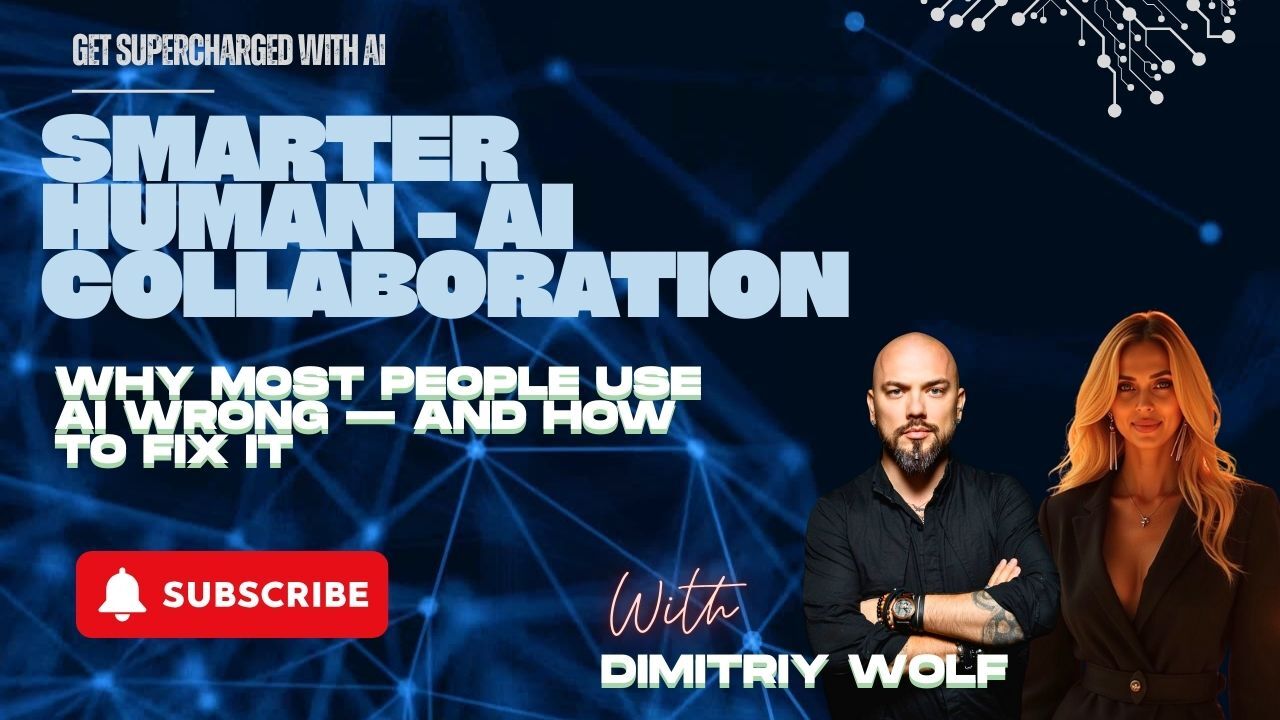
The Supercharged Podcast is becoming a place where real conversations about AI happen — beyond hype, tools, or surface-level takes.
We sit down with industry leaders, founders, builders, and operators who are actively using AI — or building AI-first businesses — to understand how it’s actually changing the way work gets done.
From strategy and systems to experimentation and execution, these are practical, honest conversations with people shaping what comes next.
⚡ Trends for the Future
OpenAI launches new macOS app for agentic coding

OpenAI releases macOS Codex app with advanced agentic programming capabilities.
Artificial intelligence is revolutionizing software development, with AI agents now handling much of the routine programming work. As developers explore new ways to collaborate with AI, even the most advanced AI laboratories struggle to keep pace with rapidly evolving interfaces and workflows.
The current industry trend focuses on agentic software development, where AI agents work independently on coding tasks. This approach has been popularized by applications like Claude Code and Cowork. Meanwhile, OpenAI has been steadily developing its Codex tool, which debuted as a command-line interface in April before expanding to a web-based platform a month later.
On Monday, OpenAI made a significant leap forward by launching a new macOS application for Codex. The app incorporates many of the agentic practices that have gained popularity over the past year, featuring support for multiple parallel agents and integrating advanced workflows. This launch follows closely behind the release of GPT-5.2-Codex, OpenAI's most sophisticated coding model, which the company hopes will attract users away from Claude Code.
"If you really want to do sophisticated work on something complex, 5.2 is the strongest model by far," CEO Sam Altman explained to reporters. "However, it's been harder to use, so taking that level of model capability and putting it in a more flexible interface, we think is going to matter quite a bit."
Despite Altman's confidence, coding benchmarks present a more nuanced picture. While GPT-5.2 leads on TerminalBench for command-line programming tasks, competitors like Gemini 3 and Claude Opus achieve similar scores within the benchmark's margin of error. Results from SWE-bench, which tests AI's ability to fix real-world software bugs, show no clear advantage for GPT-5.2.
The new Codex app includes innovative features like background automations that run on scheduled intervals and customizable agent personalities ranging from pragmatic to empathetic. Altman emphasized the app's development speed potential, stating users can create sophisticated software in just hours, limited only by how quickly they can input new ideas.

⚡ Let’s Make AI Actually Useful:
What Would Move the Needle in *Your* Industry?
AI has potential — but generic advice rarely helps.
What would be genuinely valuable for AI to do in your industry right now?
• Automate a painful workflow?
• Improve decision-making?
• Replace a manual process that wastes time?
• Help your team upskill faster?
Tell us what you’d want AI to handle — or where you feel stuck.
We’re using these insights to curate **industry-specific trainings, live webinars, and practical guidance** you can actually apply.
AI will be humanity's greatest force multiplier, helping us transcend our limitations and build a world where technology serves our highest aspirations and creates opportunities for all.
Lex Fridman is an AI researcher at MIT and host of one of the world's most popular podcasts focused on artificial intelligence, science, and philosophy, where he conducts deep conversations with leading thinkers across diverse fields. His work in autonomous vehicles, human-robot interaction, and machine learning, combined with his thoughtful exploration of AI's implications for humanity, has made him an influential voice advocating for developing beneficial AI while grappling honestly with both its extraordinary potential and existential risks.
🌡️ Use the Satisfaction Thermometer to show us how much you enjoyed The Supercharged today ;)

The Supercharged is aiming to be the world's #1 AI business magazine and is on a mission to empower 1,000,000 entrepreneurs worldwide by 2025, guiding them through the transition into the AI-driven creative age. We're dedicated to breaking down complex technologies, sharing actionable insights, and fostering a community that thrives on innovation, to become the ultimate resource for businesses navigating the AI revolution.
The Supercharged is the #1 AI Newsletter for Entrepreneurs, with 25,000 + readers working at the world’s leading startups and enterprises. The Supercharged is free for the readers. Main ads are typically sold out 2 weeks in advance. You can book future ad spots here.
I'm sending this email because you registered for one of our workshops or our affiliates brought you. You can unsubscribe at the bottom of each email at any time.
