In partnership with

Become the go-to AI expert in 30 days

AI keeps coming up at work, but you still don't get it?
That's exactly why 1M+ professionals working at Google, Meta, and OpenAI read Superhuman AI daily.
Here's what you get:
Daily AI news that matters for your career - Filtered from 1000s of sources so you know what affects your industry.
Step-by-step tutorials you can use immediately - Real prompts and workflows that solve actual business problems.
New AI tools tested and reviewed - We try everything to deliver tools that drive real results.
All in just 3 minutes a day
Good morning ☀️, leader of the next generation.
Technology is reshaping how the world works.
The real question is not what it can do — but how we choose to use it.
We focus on using technology to support human evolution.
Progress works when responsibility stays human.
⚡ WHAT'S AT STAKE TODAY ⚡
- 🤖💰 ChatGPT rolls out ads
- 🏦📈 Anthropic closes in on $20B round
- 👔🔄 Workday CEO Eschenbach departs, with co-founder Aneel Bhusri returning as CEO
- 🌍⚔️ Anthropic's India expansion collides with a local company that already had the name
- 📊🤖 Databricks CEO says SaaS isn't dead, but AI will soon make it irrelevant
- 😰🔥 The first signs of burnout are coming from the people who embrace AI the most
- ⚕️⚠️ Doctors warn against dangers of health misinformation from AI sources
- 📚👨🏫 AI in classrooms: Why teachers say humans still matter
- 🔧📹 Ex-Googlers are building infrastructure to help companies understand their video data
OpenAI begins testing ads for free and budget ChatGPT users
ChatGPT rolls out ads

OpenAI has officially launched its controversial advertising experiment, beginning to test ads in ChatGPT for U.S. users on Free and Go subscription plans. The Go plan, priced at $8 monthly, was introduced globally in mid-January as a budget-friendly option between free and premium tiers.
Premium subscribers using Plus, Pro, Business, Enterprise, and Education plans will remain ad-free, maintaining their uninterrupted experience. This tiered approach reflects OpenAI's strategy to monetize its vast free user base while preserving premium value for paying customers.
In response to widespread user concerns, OpenAI emphasized that advertisements won't influence ChatGPT's responses. The company stated: "Ads do not influence the answers ChatGPT gives you, and we keep your conversations with ChatGPT private from advertisers." They positioned this move as supporting "broader access to more powerful ChatGPT features while maintaining trust."
The timing proved particularly awkward following Anthropic's brutal Super Bowl advertising campaign. The rival AI company mocked OpenAI's advertising plans through commercials featuring robotic actors delivering advice interrupted by poorly targeted ads. OpenAI CEO Sam Altman responded defensively, calling Anthropic's ads "dishonest" and labeling the company "authoritarian."
This isn't OpenAI's first advertising misstep. The company faced significant backlash late last year when testing app suggestions that users perceived as unwanted advertisements. However, revenue generation remains crucial for covering massive development costs and business expansion.
OpenAI's advertising system will use contextual matching based on conversation topics, chat history, and previous ad interactions. Users researching recipes might see grocery delivery or meal kit advertisements. The company promises advertisers will only receive aggregate performance data like views and clicks, not personal user information.
To address privacy concerns, OpenAI implemented several user controls. Users can view their ad interaction history, clear it anytime, dismiss advertisements, provide feedback, understand why specific ads appeared, and manage personalization settings. These features aim to give users greater control over their advertising experience.
The company established strict content boundaries for advertising placement. Ads won't appear for users under 18 or near sensitive topics including health, politics, or mental health discussions. All advertisements will be clearly labeled as sponsored content and visually separated from ChatGPT's organic responses.
Despite OpenAI's assurances about ad optimization being based on "what's most helpful," critics remain skeptical about potential influence on AI responses. The fundamental concern is whether commercial interests might subtly shape ChatGPT's supposedly neutral advice and information.
Consumer resistance to AI advertising remains strong, reflecting broader concerns about commercializing AI assistance. Users worry that advertising could compromise the perceived objectivity and trustworthiness that makes ChatGPT valuable for important personal and professional tasks.
This advertising rollout represents a pivotal moment for AI monetization. OpenAI's approach of maintaining ad-free premium tiers while introducing advertising to free and budget users creates a clear value proposition. Success or failure of this model will likely influence how other AI companies approach similar revenue challenges in the increasingly competitive artificial intelligence landscape.
🔍 Which AI Dilemma Should We Tackle First?
- ⚠️ 1. Speed vs. Understanding The rapid pace of AI development is outpacing our ability to comprehend or regulate it.
- 🧠 2. Lack of Alignment AI systems don’t necessarily optimize for what’s good for humans—even when they seem to.
- 🏢 3. Power Concentration AI is consolidating power into the hands of a few tech giants and governments.
- 🤖 4. Automation Without Purpose AI is replacing jobs faster than society is creating meaningful alternatives.
- 🛑 5. Loss of Human Agency We risk becoming passive consumers of AI decisions, losing creativity and independent thinking.
Block 125+ Coupon Extensions Instantly

Stop coupon extensions before they even touch your checkout. KeepCart blocks 125+ plugins like Honey, CapitalOne Shopping, and Karma from auto-applying random codes and draining your margins.
Brands like Quince and Newton use KeepCart to protect revenue and keep every sale clean.
After months of using KeepCart, Mando says “It’s paid for itself multiple times over.”
Anthropic nears massive $20B funding round at $350B valuation
Anthropic closes in on $20B round

Anthropic is finalizing a $20 billion funding round at a $350 billion valuation, doubling their initial target due to high investor demand. The AI company previously raised $13 billion just five months ago but seeks more capital amid intense competition and rising compute costs.
Major investors include Sequoia Capital, Lightspeed Venture Partners, and Singapore's sovereign wealth fund, with strategic partners Nvidia and Microsoft providing the bulk of funding. Anthropic's recent successes include popular coding agents and new legal research models that disrupted traditional data firms' stock prices.
🎙️ The Supercharged Podcast Is Growing
Conversations with the People Building the AI Future
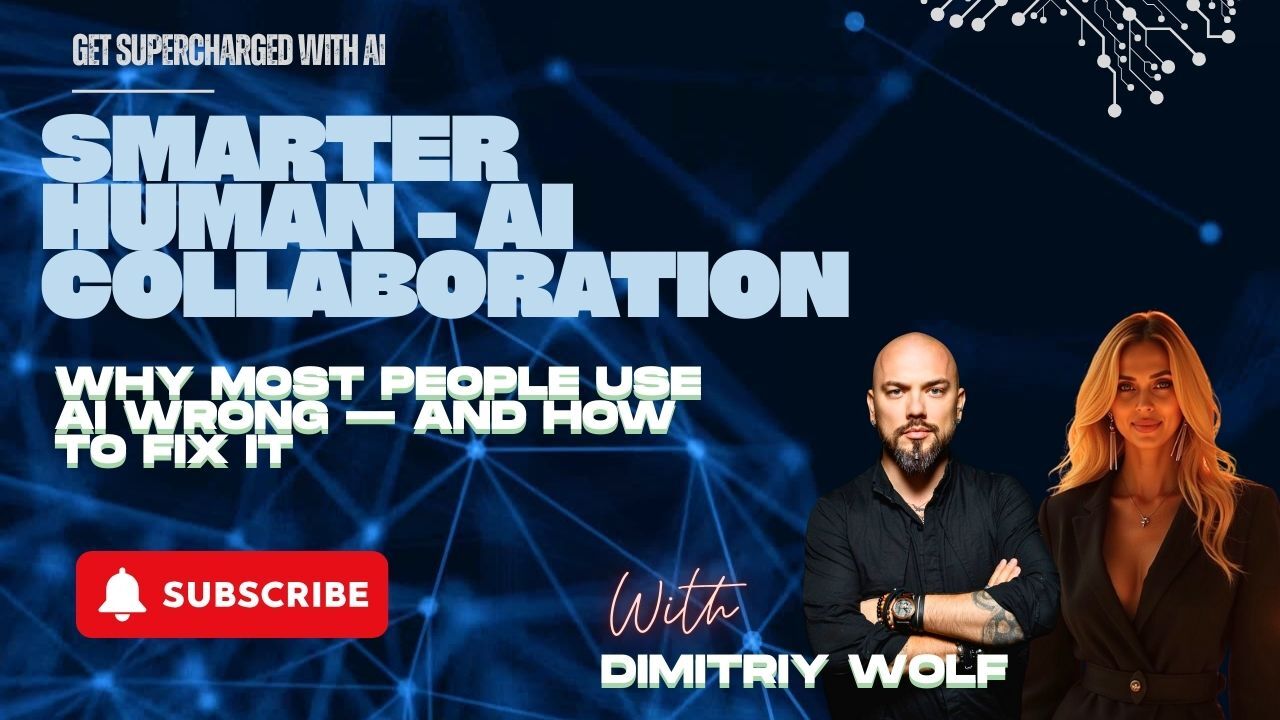
The Supercharged Podcast is becoming a place where real conversations about AI happen — beyond hype, tools, or surface-level takes.
We sit down with industry leaders, founders, builders, and operators who are actively using AI — or building AI-first businesses — to understand how it’s actually changing the way work gets done.
From strategy and systems to experimentation and execution, these are practical, honest conversations with people shaping what comes next.
⚡ Trends for the Future
Ex-Googlers are building infrastructure to help companies understand their video data

Former Google employees launch InfiniMind to transform unused video into business intelligence.
Companies worldwide are drowning in video data. From broadcast archives to security cameras and production footage, most of this content sits unused on servers as "dark data" - a massive untapped resource that organizations collect but rarely analyze meaningfully.
Two former Google Japan employees, CEO Aza Kai and COO Hiraku Yanagita, recognized this challenge after spending nearly a decade together at the tech giant. In 2024, they co-founded InfiniMind, a Tokyo-based startup developing infrastructure to convert petabytes of unviewed video and audio into structured, queryable business data.
"We saw this inflection point coming while we were still at Google," Kai explained. The breakthrough came from advances in vision-language models between 2021 and 2023, which moved video AI beyond simple object tagging to understanding narratives, causality, and complex content relationships.
InfiniMind recently raised $5.8 million in seed funding led by UTEC, with participation from CX2, Headline Asia, Chiba Dojo, and an AI researcher at a16z Scout. The company is relocating its headquarters to the U.S. while maintaining operations in Japan.
Their first product, TV Pulse, launched in Japan in April 2025, analyzing television content in real-time to track product exposure, brand presence, and customer sentiment for media and retail companies. The platform already serves paying customers including wholesalers and major broadcasters.
The flagship product DeepFrame, capable of processing 200 hours of footage to pinpoint specific scenes, speakers, or events, enters beta in March with full launch planned for April 2026. Unlike competitors focusing on general-purpose APIs, InfiniMind targets enterprise use cases including monitoring, safety, and security analysis.
"Our solution requires no code and integrates audio, sound, and speech understanding, not just visuals," Kai said. "Cost efficiency is a major differentiator - we can handle unlimited video length while solving the cost challenges most existing solutions ignore."

⚡ Let’s Make AI Actually Useful:
What Would Move the Needle in *Your* Industry?
AI has potential — but generic advice rarely helps.
What would be genuinely valuable for AI to do in your industry right now?
• Automate a painful workflow?
• Improve decision-making?
• Replace a manual process that wastes time?
• Help your team upskill faster?
Tell us what you’d want AI to handle — or where you feel stuck.
We’re using these insights to curate **industry-specific trainings, live webinars, and practical guidance** you can actually apply.
AI represents the ultimate amplifier of human ingenuity, giving us tools to transcend barriers and create breakthroughs that will transform civilization for the better.
Sergey Levine is a professor at UC Berkeley and a leading researcher in robot learning and reinforcement learning, where his work has enabled robots to learn complex skills through deep learning and large-scale data collection. His pioneering research in end-to-end learning for robotics and his contributions to making AI systems more capable of handling real-world tasks have advanced both academic understanding and practical applications, and he continues to advocate for developing intelligent machines that can adapt to diverse environments and augment human capabilities.
🌡️ Use the Satisfaction Thermometer to show us how much you enjoyed The Supercharged today ;)

The Supercharged is aiming to be the world's #1 AI business magazine and is on a mission to empower 1,000,000 entrepreneurs worldwide by 2025, guiding them through the transition into the AI-driven creative age. We're dedicated to breaking down complex technologies, sharing actionable insights, and fostering a community that thrives on innovation, to become the ultimate resource for businesses navigating the AI revolution.
The Supercharged is the #1 AI Newsletter for Entrepreneurs, with 25,000 + readers working at the world’s leading startups and enterprises. The Supercharged is free for the readers. Main ads are typically sold out 2 weeks in advance. You can book future ad spots here.
I'm sending this email because you registered for one of our workshops or our affiliates brought you. You can unsubscribe at the bottom of each email at any time.
