Good morning ☀️, leader of the next generation.
Technology is reshaping how the world works.
The real question is not what it can do — but how we choose to use it.
We focus on using technology to support human evolution.
Progress works when responsibility stays human.
⚡ WHAT'S AT STAKE TODAY ⚡
- 🎵⚖️ Music publishers sue Anthropic for $3B over 'flagrant piracy' of 20,000 works
- 🚀💼 Elon Musk's SpaceX, Tesla, and xAI in talks to merge, according to reports
- 🎬📉 OpenAI's Sora app is struggling after its stellar launch
- 🍎🇮🇱 Apple buys Israeli startup Q.ai as the AI race heats up
- 📦💰 Amazon is reportedly in talks to invest $50B in OpenAI
- 🤖🔌 Anthropic brings agentic plug-ins to Cowork
- 🇮🇳💸 India offers zero taxes through 2047 to lure global AI workloads
- 💰👨💼 Why Tether's CEO is everywhere right now
- 🤖🌐 OpenClaw's AI assistants are now building their own social network
Major music publishers seek $3B from Anthropic over alleged piracy
Music publishers sue Anthropic for $3B over 'flagrant piracy' of 20,000 works

A coalition of major music publishers, including Concord Music Group and Universal Music Group, has launched a massive legal assault against AI company Anthropic, alleging the firm illegally downloaded over 20,000 copyrighted musical works. The lawsuit, seeking more than $3 billion in damages, could become one of the largest non-class action copyright cases in U.S. legal history.
The publishers claim Anthropic engaged in widespread piracy by illegally obtaining copyrighted songs, sheet music, lyrics, and musical compositions to train its AI systems, including the popular Claude chatbot. This represents a significant escalation from their original lawsuit, which initially covered only about 500 copyrighted works.
The case builds on precedent set by the recent Bartz v. Anthropic lawsuit, where fiction and nonfiction authors successfully sued the AI company for similar copyright violations. In that landmark case, Judge William Alsup established that while training AI models on copyrighted content may be legal under certain circumstances, acquiring that content through piracy definitively crosses legal boundaries.
The Bartz case resulted in a $1.5 billion settlement for Anthropic, with affected writers receiving approximately $3,000 per work for roughly 500,000 copyrighted pieces. However, for a company valued at $183 billion, this settlement was viewed more as a cost of doing business than a deterrent.
The music publishers' discovery of additional piracy allegations emerged during the legal proceedings of the Bartz case. When they attempted to amend their original lawsuit to include these new piracy claims, the court denied their motion in October, ruling that the publishers had failed to investigate these allegations earlier in the process.
Undeterred, the publishers filed this separate lawsuit, which not only targets Anthropic as a company but also names CEO Dario Amodei and co-founder Benjamin Mann as individual defendants. This strategic move signals the publishers' intent to hold corporate leadership personally accountable for the alleged piracy.
The lawsuit pulls no punches in its criticism of Anthropic's business practices. "While Anthropic misleadingly claims to be an AI 'safety and research' company, its record of illegal torrenting of copyrighted works makes clear that its multibillion-dollar business empire has in fact been built on piracy," the legal filing states.
The case represents the latest front in the ongoing battle between content creators and AI companies over the use of copyrighted material for training artificial intelligence systems. Music publishers have been particularly aggressive in protecting their intellectual property, as the industry has historically faced significant challenges from digital piracy and unauthorized use of musical works.
The timing of this lawsuit is particularly significant as it comes amid growing scrutiny of AI companies' data acquisition practices. Regulators and courts are increasingly examining how these companies obtain the massive datasets needed to train their AI models, with particular attention to whether proper licensing agreements are in place.
For Anthropic, this lawsuit represents another major legal challenge that could impact both its financial standing and reputation in the AI industry. The company has positioned itself as a responsible AI developer focused on safety and ethical practices, making these piracy allegations particularly damaging to its brand image.
Despite requests for comment, Anthropic has remained silent on the allegations, offering no public response to the publishers' claims. This silence may reflect the company's legal strategy or simply indicate that it's still formulating its defense against these serious allegations.
The outcome of this case could establish important precedents for how AI companies must acquire and use copyrighted content, potentially reshaping the entire industry's approach to data acquisition and training methodologies.
Dalio: “Stocks Only Look Strong in Dollar Terms.” Here’s a Globally Priced Alternative for Diversification.

Ray Dalio recently reported that much of the S&P 500’s 2025 gains came not from real growth, but from the dollar quietly losing value. Reportedly down 10% last year!
He’s not alone. Several BlackRock, Fidelity, and Bloomberg analysts say to expect further dollar decline in 2026.
So, even when your U.S. assets look “up,” your purchasing power may actually be down.
Which is why many investors are adding globally priced, scarce assets to their portfolios—like art.
Art is traded on a global stage, making it largely resistant to currency swings.
Now, Masterworks is opening access to invest in artworks featuring legends like Banksy, Basquiat, and Picasso as a low-correlation asset class with attractive appreciation historically (1995-2025).*
Masterworks’ 26 sales have yielded annualized net returns like 14.6%, 17.6%, and 17.8%.
They handle the sourcing, storage, and sale. You just click to invest.
Special offer for my subscribers:
*Based on Masterworks data. Investing involves risk. Past performance is not indicative of future returns. Important Reg A disclosures: masterworks.com/cd.
Musk's companies exploring potential merger ahead of SpaceX IPO
Elon Musk's SpaceX, Tesla, and xAI in talks to merge, according to reports

Three of Elon Musk's companies—SpaceX, Tesla, and xAI—are reportedly discussing potential mergers. Two scenarios are under consideration: a SpaceX-Tesla combination or a SpaceX-xAI merger ahead of SpaceX's planned IPO this year.
The consolidation could unite Grok chatbot, X platform, Starlink satellites, and SpaceX rockets under one corporation. Recent Nevada corporate filings suggest Musk is preparing for various merger possibilities. Both SpaceX and Tesla have already invested $2 billion each in xAI, indicating growing resource-sharing between the companies.
🎙️ The Supercharged Podcast Is Growing
Conversations with the People Building the AI Future
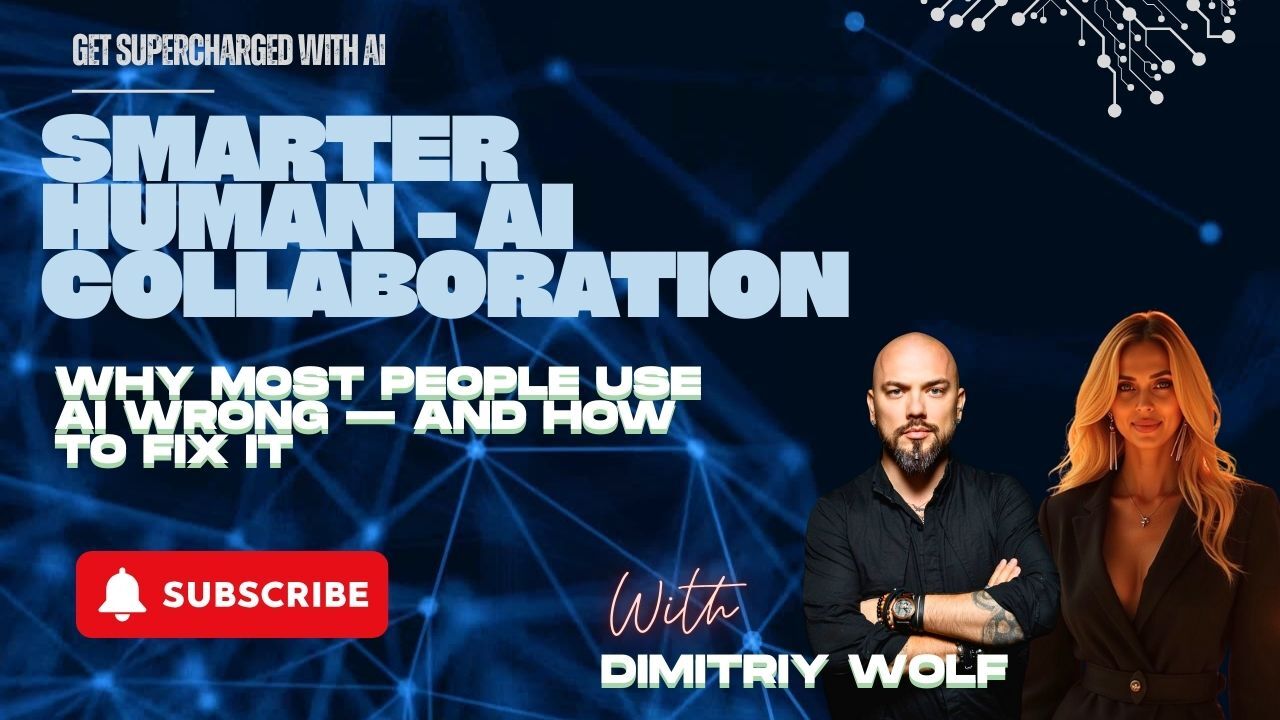
The Supercharged Podcast is becoming a place where real conversations about AI happen — beyond hype, tools, or surface-level takes.
We sit down with industry leaders, founders, builders, and operators who are actively using AI — or building AI-first businesses — to understand how it’s actually changing the way work gets done.
From strategy and systems to experimentation and execution, these are practical, honest conversations with people shaping what comes next.
⚡ Trends for the Future
OpenClaw's AI assistants are now building their own social network

AI assistants create their own social network on Moltbook platform.
The viral personal AI assistant formerly known as Clawdbot has undergone another rebrand, now settling on "OpenClaw" after legal challenges from Anthropic forced an initial change to Moltbot. Austrian developer Peter Steinberger ensured this name change avoided copyright issues by researching trademarks and seeking OpenAI's permission.
Despite its youth, OpenClaw has attracted over 100,000 GitHub stars in just two months, demonstrating remarkable community growth. The project has evolved far beyond Steinberger's solo efforts, with multiple maintainers now supporting development.
The most intriguing development is Moltbook, a social network where AI assistants interact independently. Former Tesla AI director Andrej Karpathy called it "genuinely the most incredible sci-fi takeoff-adjacent thing I have seen recently," noting how AI agents self-organize and discuss topics including private communication methods.
British programmer Simon Willison described Moltbook as "the most interesting place on the internet right now." AI agents share information on topics from Android automation to webcam stream analysis through "Submolts" forums, using downloadable skill files to interact with the network.
However, significant security concerns remain. OpenClaw currently requires controlled environments and technical expertise, making it unsuitable for mainstream users. As one maintainer warned, "if you can't understand how to run a command line, this is far too dangerous of a project for you to use safely."
The project faces industry-wide challenges like prompt injection attacks, where malicious messages could trick AI models into unintended actions. Steinberger acknowledges these limitations while emphasizing security as the top priority.
To support growth, OpenClaw now accepts sponsorship with lobster-themed tiers from "krill" ($5/month) to "poseidon" ($500/month). Notable sponsors include Path's Dave Morin and Ben Tossell, who sold Makerpad to Zapier. Tossell believes in backing developers who create accessible open-source AI tools, seeing value in democratizing AI's potential.

⚡ Let’s Make AI Actually Useful:
What Would Move the Needle in *Your* Industry?
AI has potential — but generic advice rarely helps.
What would be genuinely valuable for AI to do in your industry right now?
• Automate a painful workflow?
• Improve decision-making?
• Replace a manual process that wastes time?
• Help your team upskill faster?
Tell us what you’d want AI to handle — or where you feel stuck.
We’re using these insights to curate **industry-specific trainings, live webinars, and practical guidance** you can actually apply.
AI is humanity's most transformative tool for progress, giving us the ability to solve problems faster and create innovations that improve lives across the entire world.
Chris Lattner is a computer scientist and creator of the Swift programming language and LLVM compiler infrastructure, whose work has fundamentally shaped modern software development used by millions of developers worldwide. As a former leader at Apple, Tesla, and Google, and now working on AI compiler technology, he has been instrumental in making programming more accessible and efficient, advocating for tools that empower developers to build better software and harness AI capabilities more effectively.
🌡️ Use the Satisfaction Thermometer to show us how much you enjoyed The Supercharged today ;)

The Supercharged is aiming to be the world's #1 AI business magazine and is on a mission to empower 1,000,000 entrepreneurs worldwide by 2025, guiding them through the transition into the AI-driven creative age. We're dedicated to breaking down complex technologies, sharing actionable insights, and fostering a community that thrives on innovation, to become the ultimate resource for businesses navigating the AI revolution.
The Supercharged is the #1 AI Newsletter for Entrepreneurs, with 25,000 + readers working at the world’s leading startups and enterprises. The Supercharged is free for the readers. Main ads are typically sold out 2 weeks in advance. You can book future ad spots here.
I'm sending this email because you registered for one of our workshops or our affiliates brought you. You can unsubscribe at the bottom of each email at any time.
