In partnership with

The Future of Shopping? AI + Actual Humans.

AI has changed how consumers shop by speeding up research. But one thing hasn’t changed: shoppers still trust people more than AI.
Levanta’s new Affiliate 3.0 Consumer Report reveals a major shift in how shoppers blend AI tools with human influence. Consumers use AI to explore options, but when it comes time to buy, they still turn to creators, communities, and real experiences to validate their decisions.
The data shows:
Only 10% of shoppers buy through AI-recommended links
87% discover products through creators, blogs, or communities they trust
Human sources like reviews and creators rank higher in trust than AI recommendations
The most effective brands are combining AI discovery with authentic human influence to drive measurable conversions.
Affiliate marketing isn’t being replaced by AI, it’s being amplified by it.
Good morning ☀️, leader of the next generation.
Sometimes we give technology too much credit or too much blame.
The truth is, it’s a tool. How we use it is what matters.
Used with purpose, it helps us see more clearly, build faster, and express ourselves in new ways.
It’s not about chasing trends. It’s about creating something real.
WHAT'S AT STAKE TODAY ⚡
- 🤖💰 Unconventional AI confirms its massive $475M seed round
- 🔄🤝 CoreWeave CEO defends AI circular deals as 'working together'
- 🎅🗣️ AI startup Tavus founder says users talk to its AI Santa 'for hours' per day
- 📰🔍 Google is testing AI-powered article overviews on select publications' Google News pages
- 🎵🤖 Spotify tests more personalized, AI-powered 'Prompted Playlists'
- 💻🕵️ Nvidia is reportedly testing tracking software as chip-smuggling rumors swirl
Google introduces managed servers to connect AI agents with tools
Google launches managed MCP servers that let AI agents simply plug into its tools

AI agents promise to revolutionize how we plan trips, answer business questions, and solve complex problems. However, connecting these agents to external tools and data has been a persistent challenge. Developers typically rely on fragmented connectors that are difficult to maintain and scale, creating significant governance issues.
Google is addressing this problem with the launch of fully managed, remote MCP (Model Context Protocol) servers designed to seamlessly integrate AI agents with Google and Cloud services including Maps, BigQuery, Compute Engine, and Kubernetes Engine.
"We are making Google agent-ready by design," said Steren Giannini, product management director at Google Cloud. The new system allows developers to connect agents by simply pasting a URL to a managed endpoint, eliminating weeks of setup time previously required for building connectors.
The practical applications are substantial. An analytics assistant could query BigQuery directly, while operations agents could interact with infrastructure services. For Maps integration specifically, agents gain access to real-time, accurate location data rather than relying on potentially outdated model training data. This ensures more reliable trip planning and location-based services.
The MCP servers are launching in public preview at no additional cost for existing Google enterprise customers. Google expects to achieve general availability early next year, with new MCP servers rolling out weekly. The company plans to expand support to cover storage, databases, logging, monitoring, and security services in the coming months.
MCP, originally developed by Anthropic as an open-source standard, enables AI systems to connect with external data and tools. The protocol has gained widespread adoption across the agent development community. This week, Anthropic donated MCP to a new Linux Foundation initiative focused on standardizing AI agent infrastructure.
The beauty of this standardized approach is universal compatibility. Google's MCP servers can connect to any compliant client, including Gemini CLI, AI Studio, Anthropic's Claude, and OpenAI's ChatGPT. Giannini confirmed successful testing across multiple platforms, stating "they just work."
Beyond simple connectivity, Google's enterprise strategy centers on Apigee, its API management platform. Apigee can translate standard APIs into MCP servers, transforming existing endpoints like product catalogs into discoverable agent tools while maintaining existing security and governance frameworks. This means the same API guardrails protecting traditional applications now extend to AI agents.
Security remains a top priority. Google's MCP servers incorporate Google Cloud IAM for granular permission control, explicitly defining agent capabilities. Additional protection comes from Google Cloud Model Armor, described as a specialized firewall for agentic workloads that defends against advanced threats like prompt injection and data exfiltration. Administrators benefit from comprehensive audit logging for enhanced observability.
This launch follows Google's recent Gemini 3 model release and represents the company's strategy to combine enhanced reasoning capabilities with reliable real-world tool integration. By handling the infrastructure complexity, Google aims to accelerate AI agent development and deployment across enterprise environments.
"We built the plumbing so that developers don't have to," Giannini explained, summarizing Google's approach to simplifying AI agent development while maintaining enterprise-grade security and governance standards.
AI voice company pivots strategy despite massive valuation success
ElevenLabs just hit a $6.6B valuation. Its CEO says the real money isn't in voice anymore.
ElevenLabs, the artificial intelligence company renowned for creating highly realistic AI-generated voices, has achieved a remarkable $6.6 billion valuation. Despite this success built on voice technology, the company's CEO indicates a strategic shift is underway.
According to leadership, the future revenue opportunities lie beyond traditional voice applications. This suggests ElevenLabs is exploring new AI frontiers while leveraging its established expertise in audio generation technology to capture emerging market opportunities.
🎙️ NEW EPISODE DROP:
Inventing the Future with Pablos Holman
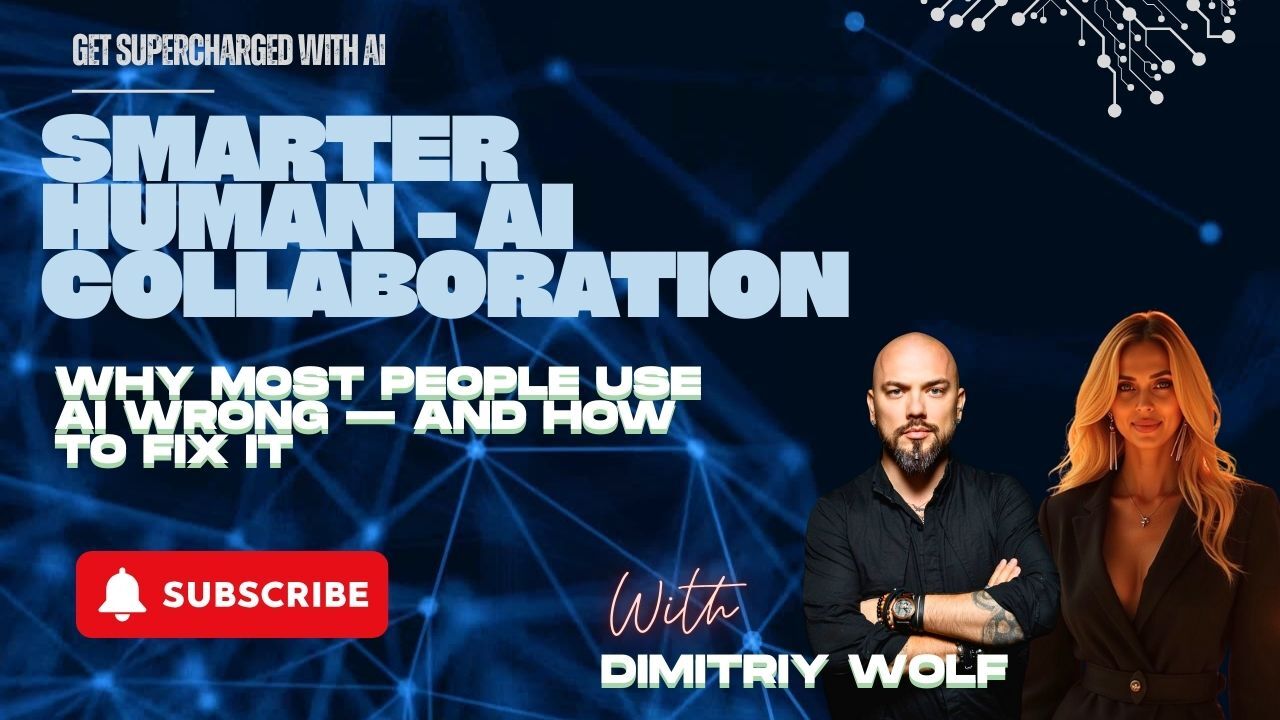
I sat down with Pablos Holman — hacker, inventor, futurist, and founder of Deep Future — for one of the most mind-expanding conversations I’ve ever had.
We talked about using AI to solve real problems, what most entrepreneurs get completely wrong, and how Pablos has spent his career inventing the tools of tomorrow — from laser-powered mosquito killers to nuclear reactors powered by waste.
If you care about the future, technology, or building what others say is impossible — this episode is for you.
⚡ Trends for the Future
Figma launches new AI-powered object removal and image extension

Figma introduces AI image editing features to compete with Adobe.
Design tool Figma has launched new AI-powered image-editing capabilities, introducing object removal, isolation features, and image expansion tools. The update aims to eliminate the need for designers to export images to external editing software and reimport them back into Figma.
The company explained that while generation models like Nano Banana excel at creating images, users require more granular editing tools that function without text prompts. Figma has enhanced its lasso tool, allowing users to select objects for removal or isolation while maintaining background and color characteristics when moving elements around.
Beyond object manipulation, users can now adjust lighting, shadow, color, and focus for selected objects. The new image-expansion feature addresses format-specific creative needs, enabling designers to extend backgrounds and fill details when converting content between different formats, such as transforming a square image into web or mobile banners.
Figma has consolidated all image-editing tools into a unified toolbar for improved accessibility. This centralized interface allows users to select objects, change background colors, and add annotations or text. The company highlighted that background removal, being one of the most popular actions on the platform, receives prominent placement in the new toolbar.
The launch marks Figma's effort to catch up with competitors like Adobe and Canva, who have offered similar object removal capabilities for several years. These new features are currently available on Figma Design and Draw, with plans to roll them out across all Figma tools in the coming year.
Interestingly, Figma's announcement coincides with Adobe making comparable features available within ChatGPT. While Figma was a launch partner for the ChatGPT integration in October, it remains unclear whether these new image-editing functions will be accessible to users working with Figma through OpenAI's platform.

⚡ You’re Smart. Strategic. Intentional. So Let’s Be Real:
Where Are You Holding Back— On Purpose?
Every smart operator has something they’re intentionally avoiding.
Not because they’re lazy — but because it’s risky, unknown, or just... a bit *uncomfortable*.
So what’s that thing for you?
That one decision, move, or experiment you know would push you forward — but you’ve been choosing not to do it.
Tell us — and we’ll share a tactical POV or tool to help you rethink it.
No fluff. Just momentum.

AI will be humanity's most powerful collaborative partner, helping us unlock solutions we never thought possible and build a world where technology serves everyone's wellbeing.
Garrett Camp is the co-founder of Uber and founder of Expa, a startup studio that has launched numerous technology companies across various industries. His entrepreneurial vision helped create the ride-sharing industry that transformed urban mobility worldwide, and he continues to invest in and build companies that use technology to solve real-world problems, advocating for innovation that improves everyday life and creates new economic opportunities.
🎬 How to Use AI Agents to Build High-Converting Video Ads
Build once. Scale everywhere. In just minutes.
What if: Instead of spending weeks scripting, editing, and testing ads… you could build 10 variations of a high-converting video in 15 minutes — with agents handling the voiceover, visuals, call-to-action, and even the hook testing?
That’s exactly what we’ll show you this week — live.
Why This Changes Everything for Founders 🧠
- 🎥 Fast-Track Ad Creation: From idea to launch-ready video in under an hour — no team needed.
- 🔁 Test Like a Pro: Run A/B tests on 10 hooks, CTAs, or visuals — while you sleep.
- 💰 Better ROAS, Less Guessing: Let agents learn what your audience *actually* responds to.
- 📦 Works for Any Product: Digital or physical — agents adapt to your niche & brand voice.
📅 Join the Live Session w code Supercharged
We’ll walk you step-by-step through building your own ad-generating agent — no code needed.
👉 Click here to save your seat for the webinar
You’ll leave with a working prototype, free templates, and 5x more speed in your next ad campaign.
🎁 Bonus for Attendees:
- ✅ AI Agent Template for Ad Generation
- ✅ "Top 10 Hooks That Convert" Prompt Pack
- ✅ Entry to win a Free AI Strategy Audit
🌡️ Use the Satisfaction Thermometer to show us how much you enjoyed The Supercharged today ;)

The Supercharged is aiming to be the world's #1 AI business magazine and is on a mission to empower 1,000,000 entrepreneurs worldwide by 2025, guiding them through the transition into the AI-driven creative age. We're dedicated to breaking down complex technologies, sharing actionable insights, and fostering a community that thrives on innovation, to become the ultimate resource for businesses navigating the AI revolution.
The Supercharged is the #1 AI Newsletter for Entrepreneurs, with 25,000 + readers working at the world’s leading startups and enterprises. The Supercharged is free for the readers. Main ads are typically sold out 2 weeks in advance. You can book future ad spots here.
I'm sending this email because you registered for one of our workshops or our affiliates brought you. You can unsubscribe at the bottom of each email at any time.
