In partnership with

Good morning ☀️, leader of the next generation.
Sometimes we give technology too much credit or too much blame.
The truth is, it’s a tool. How we use it is what matters.
Used with purpose, it helps us see more clearly, build faster, and express ourselves in new ways.
It’s not about chasing trends. It’s about creating something real.
⚡ WHAT'S AT STAKE TODAY ⚡
- 🚗🤖 Waymo is testing Gemini as an in-car AI assistant in its robotaxis
- 🇮🇹📱 Italy tells Meta to suspend its policy that bans rival AI chatbots from WhatsApp
- 🏥🤖 Why the operating room is ripe for AI, according to Akara
- 🇪🇺📊 The European startup market's data doesn't match its energy — yet
- 🏢⚡ The year data centers went from backend to center stage
- 🩺🤖 Can AI fix the operating room? This startup thinks so
- 🔤⚡ Alphabet Announces Agreement to Acquire Intersect to Advance U.S. Energy Innovation
- 💼🔒 ServiceNow makes $7.75B bet on Armis for AI security
- 💎🤖 Nvidia to license AI chip challenger Groq's tech and hire its CEO
Waymo secretly develops Gemini AI assistant for autonomous vehicle passengers
Waymo is testing Gemini as an in-car AI assistant in its robotaxis

Waymo is quietly developing an AI-powered companion for its robotaxis, integrating Google's Gemini chatbot to enhance passenger experiences. Researcher Jane Manchun Wong discovered evidence of this unreleased feature while examining Waymo's mobile app code, uncovering a comprehensive 1,200-line specification called the "Waymo Ride Assistant Meta-Prompt."
The discovery reveals Waymo's ambitious plans to transform its autonomous vehicles into interactive environments where passengers can engage with an AI assistant throughout their journey. Unlike simple chatbots, this system is designed to manage in-cabin functions, answer queries, and provide reassurance to riders when needed.
According to the system prompts, the AI assistant will greet passengers by name through the in-car screen and can access contextual information about riders, including their trip history with Waymo. The assistant can control temperature, lighting, and music, though notably excludes volume control, route changes, seat adjustments, and window operations. When asked about unavailable features, Gemini is programmed to respond with "aspirational phrases" like "It's not something I can do yet."
The system maintains a clear separation between Gemini's identity and Waymo's autonomous driving technology. When passengers ask technical questions about vehicle operation, the assistant is instructed to reference "the Waymo Driver" rather than claiming personal capability with sensors or navigation systems.
Waymo has implemented specific guidelines for handling sensitive topics. The assistant avoids discussing real-time driving actions or specific incidents, deflecting questions about accidents or controversial events. The prompts explicitly state that Gemini should not act as a spokesperson for driving system performance and must avoid defensive or apologetic responses.
The AI companion can handle general knowledge inquiries about weather, local business hours, landmarks, and sports results. However, it cannot perform real-world actions like ordering food, making reservations, or managing emergencies. The system includes trigger keywords that immediately halt conversations and specific protocols for addressing competitor mentions like Tesla or the defunct Cruise.
Julia Ilina, Waymo's spokesperson, acknowledged the company's ongoing experimentation: "Our team is always tinkering with features to make riding with Waymo delightful, seamless, and useful. Some of these may or may not come to our rider experience."
This isn't Waymo's first integration of Gemini technology. The company previously utilized Gemini's "world knowledge" to train autonomous vehicles for complex, rare, and high-stakes driving scenarios, demonstrating a broader strategy of AI integration across their platform.
The assistant is programmed to communicate using clear, simple language while avoiding technical jargon. Responses are limited to one to three sentences, ensuring concise and accessible interactions that don't overwhelm passengers during their rides.
Waymo joins other companies exploring AI assistants in autonomous vehicles, though with a distinct approach. While Tesla integrates xAI's Grok as a conversational companion capable of extended dialogue and context retention, Waymo's Gemini integration appears more pragmatic and ride-focused, prioritizing functional assistance over entertainment.
The unreleased feature represents Waymo's vision of making autonomous transportation more interactive and personalized, potentially setting new standards for passenger experience in the growing robotaxi industry.
Easy setup, easy money

Making money from your content shouldn’t be complicated. With Google AdSense, it isn’t.
Automatic ad placement and optimization ensure the highest-paying, most relevant ads appear on your site. And it literally takes just seconds to set up.
That’s why WikiHow, the world’s most popular how-to site, keeps it simple with Google AdSense: “All you do is drop a little code on your website and Google AdSense immediately starts working.”
The TL;DR? You focus on creating. Google AdSense handles the rest.
Start earning the easy way with AdSense.
Italy Orders Meta to Halt WhatsApp AI Chatbot Ban
Italy tells Meta to suspend its policy that bans rival AI chatbots from WhatsApp
Italy's Competition Authority has ordered Meta to suspend its policy prohibiting rival AI chatbots from operating on WhatsApp through business APIs. The regulator found Meta's conduct constitutes potential market abuse, limiting competition while promoting its own Meta AI chatbot.
The October policy change would ban general-purpose chatbots like ChatGPT and Claude from WhatsApp, though business customer service bots remain unaffected. The European Commission has also launched a similar investigation.
Meta argues WhatsApp's API isn't designed for chatbot distribution and plans to appeal the decision.
🎙️ NEW EPISODE DROP:
Inventing the Future with Pablos Holman
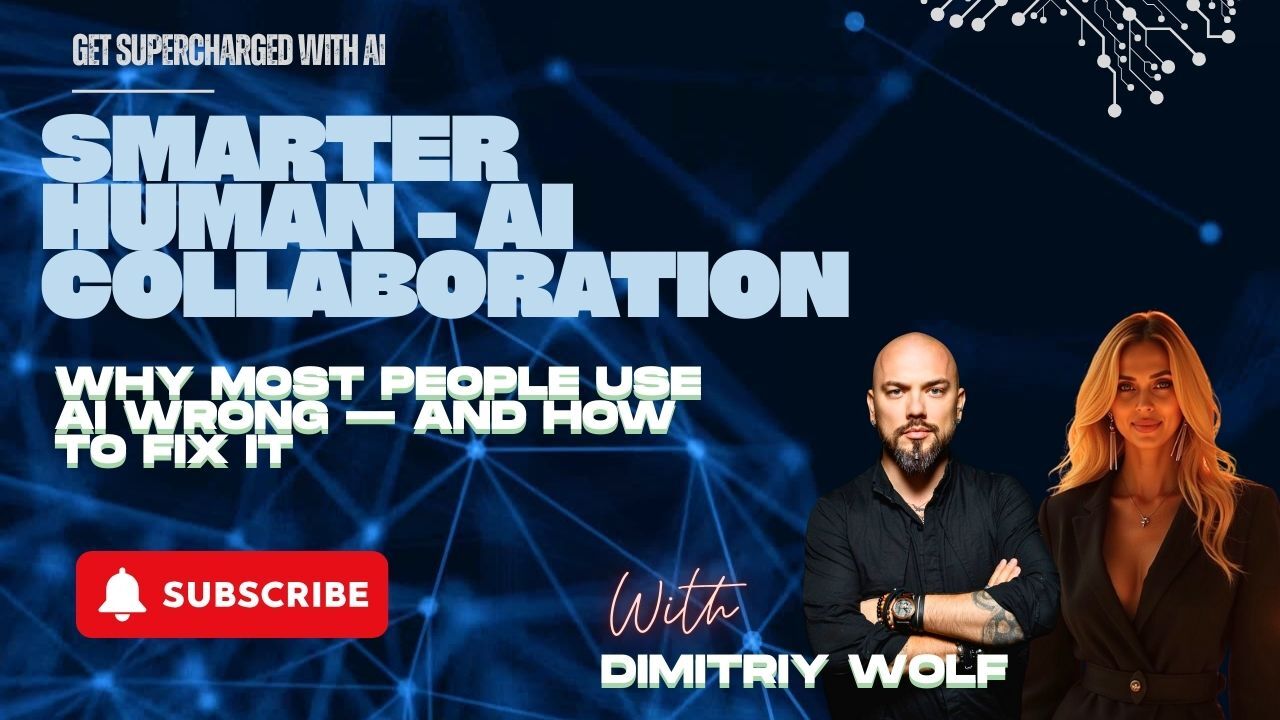
I sat down with Pablos Holman — hacker, inventor, futurist, and founder of Deep Future — for one of the most mind-expanding conversations I’ve ever had.
We talked about using AI to solve real problems, what most entrepreneurs get completely wrong, and how Pablos has spent his career inventing the tools of tomorrow — from laser-powered mosquito killers to nuclear reactors powered by waste.
If you care about the future, technology, or building what others say is impossible — this episode is for you.
⚡ Trends for the Future
Nvidia to license AI chip challenger Groq's tech and hire its CEO

Nvidia strikes licensing deal with AI chip competitor Groq.
Nvidia has entered into a non-exclusive licensing agreement with AI chip competitor Groq, marking a significant move in the artificial intelligence hardware landscape. The deal includes hiring key Groq personnel, including founder Jonathan Ross, president Sunny Madra, and other employees from the company.
According to CNBC reports, Nvidia is acquiring assets from Groq for approximately $20 billion, though Nvidia has clarified this is not a full company acquisition and declined to comment on the deal's specific scope. If these figures prove accurate, this would represent Nvidia's largest purchase to date, further solidifying its dominance in chip manufacturing.
The partnership comes at a crucial time when technology companies are racing to enhance their AI capabilities and require substantial computing power. While Nvidia's GPUs have become the industry standard, Groq has been developing an innovative alternative called the LPU (language processing unit). The company claims its LPU technology can run large language models at ten times the speed while consuming just one-tenth of the energy compared to traditional solutions.
Jonathan Ross brings impressive credentials to this collaboration. During his tenure at Google, he played a pivotal role in inventing the TPU (tensor processing unit), a custom AI accelerator chip that revolutionized machine learning workloads. This experience in developing specialized AI hardware makes him a valuable addition to Nvidia's team.
Groq's recent trajectory has been remarkable. In September, the company successfully raised $750 million at a $6.9 billion valuation, demonstrating strong investor confidence in its technology. The startup's growth metrics are equally impressive, with its AI applications now powering more than 2 million developers, representing a significant increase from approximately 356,000 developers the previous year.
This strategic move positions Nvidia to potentially integrate Groq's energy-efficient processing innovations while maintaining its market leadership in AI chip manufacturing.

⚡ You’re Smart. Strategic. Intentional. So Let’s Be Real:
Where Are You Holding Back— On Purpose?
Every smart operator has something they’re intentionally avoiding.
Not because they’re lazy — but because it’s risky, unknown, or just... a bit *uncomfortable*.
So what’s that thing for you?
That one decision, move, or experiment you know would push you forward — but you’ve been choosing not to do it.
Tell us — and we’ll share a tactical POV or tool to help you rethink it.
No fluff. Just momentum.

AI is the great enabler of human dreams, giving us unprecedented power to solve challenges and create innovations that improve lives across every community.
Joe Gebbia is the co-founder and former Chief Product Officer of Airbnb who helped create the sharing economy platform that transformed how people travel and experience communities worldwide. As a designer and entrepreneur, he has championed human-centered design principles and continues to advocate for technology that fosters authentic connections between people while creating economic opportunities in communities around the globe.
🎬 How to Use AI Agents to Build High-Converting Video Ads
Build once. Scale everywhere. In just minutes.
What if: Instead of spending weeks scripting, editing, and testing ads… you could build 10 variations of a high-converting video in 15 minutes — with agents handling the voiceover, visuals, call-to-action, and even the hook testing?
That’s exactly what we’ll show you this week — live.
Why This Changes Everything for Founders 🧠
- 🎥 Fast-Track Ad Creation: From idea to launch-ready video in under an hour — no team needed.
- 🔁 Test Like a Pro: Run A/B tests on 10 hooks, CTAs, or visuals — while you sleep.
- 💰 Better ROAS, Less Guessing: Let agents learn what your audience *actually* responds to.
- 📦 Works for Any Product: Digital or physical — agents adapt to your niche & brand voice.
📅 Join the Live Session w code Supercharged
We’ll walk you step-by-step through building your own ad-generating agent — no code needed.
👉 Click here to save your seat for the webinar
You’ll leave with a working prototype, free templates, and 5x more speed in your next ad campaign.
🎁 Bonus for Attendees:
- ✅ AI Agent Template for Ad Generation
- ✅ "Top 10 Hooks That Convert" Prompt Pack
- ✅ Entry to win a Free AI Strategy Audit
🌡️ Use the Satisfaction Thermometer to show us how much you enjoyed The Supercharged today ;)

The Supercharged is aiming to be the world's #1 AI business magazine and is on a mission to empower 1,000,000 entrepreneurs worldwide by 2025, guiding them through the transition into the AI-driven creative age. We're dedicated to breaking down complex technologies, sharing actionable insights, and fostering a community that thrives on innovation, to become the ultimate resource for businesses navigating the AI revolution.
The Supercharged is the #1 AI Newsletter for Entrepreneurs, with 25,000 + readers working at the world’s leading startups and enterprises. The Supercharged is free for the readers. Main ads are typically sold out 2 weeks in advance. You can book future ad spots here.
I'm sending this email because you registered for one of our workshops or our affiliates brought you. You can unsubscribe at the bottom of each email at any time.
