In partnership with

Ship the message as fast as you think

Founders spend too much time drafting the same kinds of messages. Wispr Flow turns spoken thinking into final-draft writing so you can record investor updates, product briefs, and run-of-the-mill status notes by voice. Use saved snippets for recurring intros, insert calendar links by voice, and keep comms consistent across the team. It preserves your tone, fixes punctuation, and formats lists so you send confident messages fast. Works on Mac, Windows, and iPhone. Try Wispr Flow for founders.
Good morning ☀️, leader of the next generation.
Technology is reshaping how the world works.
The real question is not what it can do — but how we choose to use it.
We focus on using technology to support human evolution.
Progress works when responsibility stays human.
⚡ WHAT'S AT STAKE TODAY ⚡
- 🏥💰 Lotus Health nabs $35M for AI doctor that sees patients for free
- 💪📱 Fitbit founders launch AI platform to help families monitor their health
- 🔧🎯 Intel will start making GPUs, a market dominated by Nvidia
- 🔒💎 Exclusive: Positron raises $230M Series B to take on Nvidia's AI chips
- 🏢⚖️ Peak XV says internal disagreement led to partner exits as it doubles down on AI
- 📉😰 US stocks drop on fears AI will hit software and analytics groups
- 👥📉 More companies are pointing to AI as they lay off employees
- ⚛️⚡ New Advanced Nuclear Framework to power AI
- 💻🤖 Xcode moves into agentic coding with deeper OpenAI and Anthropic integrations
AI-powered healthcare startup secures funding for free primary care
Lotus Health nabs $35M for AI doctor that sees patients for free

While millions of people turn to ChatGPT and other AI chatbots for medical advice, Lotus Health AI is taking virtual healthcare several steps further. The startup has raised $35 million in Series A funding to build what it calls an "AI doctor" that provides free primary care services around the clock.
Founded in May 2024 by KJ Dhaliwal, the entrepreneur behind the $50 million sale of dating app Dil Mil, Lotus Health emerged from his childhood experiences translating medical information for his parents and witnessing healthcare system inefficiencies firsthand. The company secured funding from CRV and Kleiner Perkins, bringing its total capital to $41 million.
Unlike simple health chatbots, Lotus functions as a complete medical practice. The platform can diagnose conditions, prescribe medications, order laboratory tests, and provide specialist referrals. Operating with licenses across all 50 states, malpractice insurance, and HIPAA-compliant systems, the service is available in 50 languages and accessible 24/7.
The innovative approach combines artificial intelligence with human oversight. While AI handles initial patient interactions and asks diagnostic questions similar to human doctors, board-certified physicians from prestigious institutions like Stanford, Harvard, and UCSF review all final diagnoses, prescriptions, and treatment recommendations before implementation.
"AI is giving the advice, but the real doctors are actually signing off on it," Dhaliwal explained. This hybrid model addresses concerns about AI hallucinations while maintaining the efficiency benefits of automated healthcare delivery.
Lotus has developed proprietary AI technology that synthesizes current medical research with individual patient histories and clinical responses to generate personalized treatment plans. The system recognizes its limitations, automatically directing patients to urgent care facilities or emergency rooms for serious conditions and referring cases requiring physical examinations to in-person physicians.
The ambitious venture faces significant regulatory challenges in the heavily regulated healthcare industry. However, CRV general partner Saar Gur, who led the investment and joined Lotus's board, believes the telemedicine infrastructure established during the pandemic, combined with AI advances, creates favorable conditions for success.
"There are many challenges, but it's not SpaceX sending astronauts to the moon," Gur noted. Having previously invested in DoorDash, Mercury, and Ring, he sees Lotus as fundamentally reimagining primary care delivery.
The timing appears strategic, as primary care physician shortages continue affecting healthcare access nationwide. Lotus claims its AI-powered model can serve ten times more patients than traditional medical practices, even while limiting consultations to 15-minute sessions.
Competition exists in the AI healthcare space, with companies like Lightspeed-backed Doctronic developing similar technologies. However, Lotus differentiates itself by offering comprehensive care services completely free of charge, at least initially.
While Dhaliwal mentioned potential future revenue streams through sponsored content or subscription models, the company currently prioritizes product development and patient acquisition over monetization. This strategy reflects confidence in the long-term viability of AI-powered healthcare delivery.
The substantial funding round validates investor appetite for healthcare innovation that addresses accessibility and cost concerns. As traditional healthcare systems strain under capacity constraints and rising costs, AI-powered alternatives like Lotus may represent a significant shift toward more efficient, accessible medical care delivery models.
🔍 Which AI Dilemma Should We Tackle First?
- ⚠️ 1. Speed vs. Understanding The rapid pace of AI development is outpacing our ability to comprehend or regulate it.
- 🧠 2. Lack of Alignment AI systems don’t necessarily optimize for what’s good for humans—even when they seem to.
- 🏢 3. Power Concentration AI is consolidating power into the hands of a few tech giants and governments.
- 🤖 4. Automation Without Purpose AI is replacing jobs faster than society is creating meaningful alternatives.
- 🛑 5. Loss of Human Agency We risk becoming passive consumers of AI decisions, losing creativity and independent thinking.
Block 125+ Coupon Extensions Instantly

Stop coupon extensions before they even touch your checkout. KeepCart blocks 125+ plugins like Honey, CapitalOne Shopping, and Karma from auto-applying random codes and draining your margins.
Brands like Quince and Newton use KeepCart to protect revenue and keep every sale clean.
After months of using KeepCart, Mando says “It’s paid for itself multiple times over.”
Fitbit creators debut AI family health monitoring startup Luffu
Fitbit founders launch AI platform to help families monitor their health

Fitbit founders James Park and Eric Friedman have launched Luffu, an AI-powered startup targeting family health monitoring. Two years after leaving Google, the duo aims to address the growing caregiving burden affecting nearly 25% of U.S. adults.
Luffu's "intelligent family care system" uses AI to organize health information, track patterns, and alert families to concerning changes. The platform consolidates scattered health data across devices and portals, allowing users to monitor medications, symptoms, lab results, and doctor visits through voice, text, or photos.
The startup begins with an app experience before expanding to hardware devices, with a limited beta currently accepting waitlist signups.
🎙️ The Supercharged Podcast Is Growing
Conversations with the People Building the AI Future
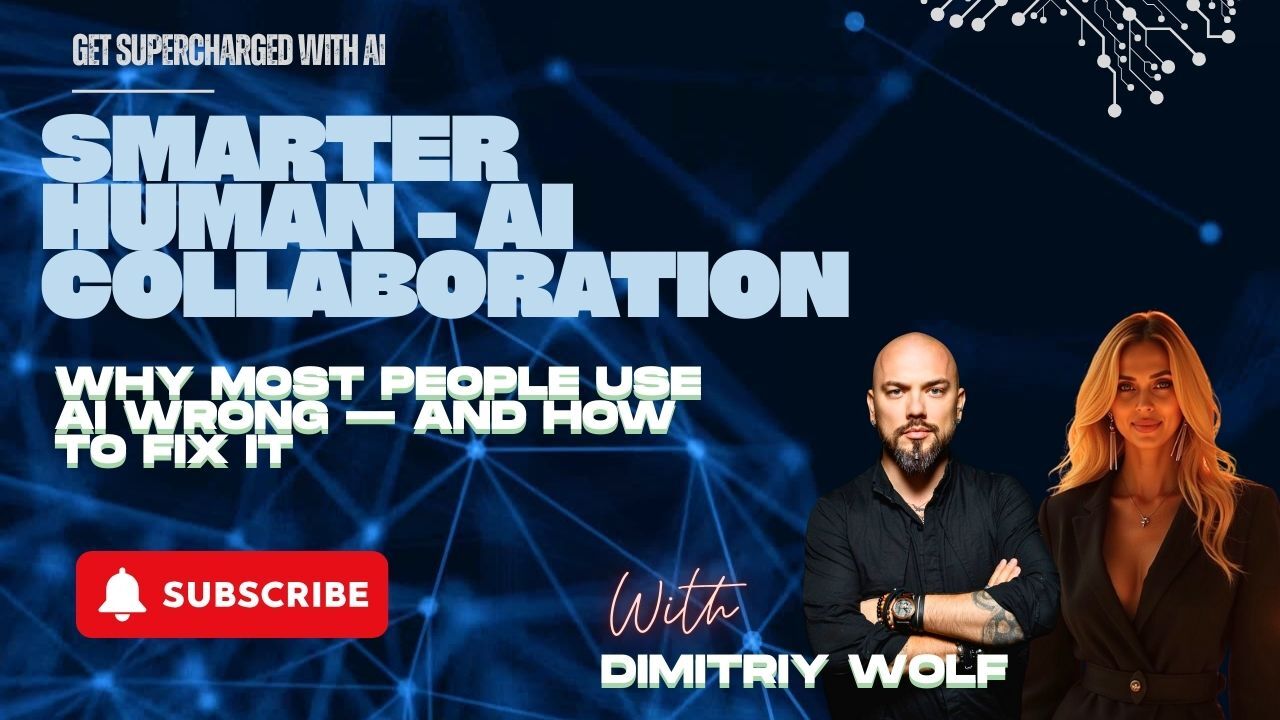
The Supercharged Podcast is becoming a place where real conversations about AI happen — beyond hype, tools, or surface-level takes.
We sit down with industry leaders, founders, builders, and operators who are actively using AI — or building AI-first businesses — to understand how it’s actually changing the way work gets done.
From strategy and systems to experimentation and execution, these are practical, honest conversations with people shaping what comes next.
⚡ Trends for the Future
Xcode moves into agentic coding with deeper OpenAI and Anthropic integrations

Apple integrates advanced AI agents into Xcode development environment.
Apple has announced the release of Xcode 26.3, introducing agentic coding capabilities that integrate Anthropic's Claude Agent and OpenAI's Codex directly into the company's official app development suite. The Release Candidate is now available to Apple Developers and will reach the App Store soon.
This update builds upon Xcode 26's introduction of ChatGPT and Claude support, but takes AI assistance to the next level. Agentic coding tools can now access more of Xcode's features to perform complex automation tasks, going beyond simple code suggestions to actively explore projects, understand structure, build applications, and run tests.
The AI agents have access to Apple's latest developer documentation, ensuring they use current APIs and follow best practices. Apple worked closely with both Anthropic and OpenAI to optimize token usage and tool calling for efficient performance within Xcode's environment.
The integration uses Model Context Protocol (MCP) to connect agents with Xcode's tools, enabling compatibility with any MCP-compatible agent for project discovery, file management, previews, and documentation access. Developers can download agents through Xcode settings and connect their AI provider accounts via sign-in or API keys.
The interface features a prompt box where developers can use natural language commands to request features or code changes. As agents work, they break tasks into smaller steps, providing transparency through visual code highlighting and detailed project transcripts showing the process.
This transparency particularly benefits new developers learning to code. Apple is hosting a "code-along" workshop Thursday to demonstrate these tools in real-time. The agents verify their code works as expected and can iterate to fix errors, while Xcode creates automatic milestones allowing easy rollback if needed.

⚡ Let’s Make AI Actually Useful:
What Would Move the Needle in *Your* Industry?
AI has potential — but generic advice rarely helps.
What would be genuinely valuable for AI to do in your industry right now?
• Automate a painful workflow?
• Improve decision-making?
• Replace a manual process that wastes time?
• Help your team upskill faster?
Tell us what you’d want AI to handle — or where you feel stuck.
We’re using these insights to curate **industry-specific trainings, live webinars, and practical guidance** you can actually apply.
AI represents our pathway to extraordinary human achievement, giving us tools to unlock creativity and solve challenges that will benefit generations to come.
Andrej Karpathy is a computer scientist and AI researcher who served as Director of AI at Tesla, where he led the development of Autopilot's neural networks, and previously was a founding member of OpenAI. His work in computer vision and deep learning, combined with his exceptional ability to explain complex AI concepts through educational content, has influenced countless researchers and practitioners, and he continues to advocate for advancing AI capabilities while making the technology more understandable and accessible to everyone.
🌡️ Use the Satisfaction Thermometer to show us how much you enjoyed The Supercharged today ;)

The Supercharged is aiming to be the world's #1 AI business magazine and is on a mission to empower 1,000,000 entrepreneurs worldwide by 2025, guiding them through the transition into the AI-driven creative age. We're dedicated to breaking down complex technologies, sharing actionable insights, and fostering a community that thrives on innovation, to become the ultimate resource for businesses navigating the AI revolution.
The Supercharged is the #1 AI Newsletter for Entrepreneurs, with 25,000 + readers working at the world’s leading startups and enterprises. The Supercharged is free for the readers. Main ads are typically sold out 2 weeks in advance. You can book future ad spots here.
I'm sending this email because you registered for one of our workshops or our affiliates brought you. You can unsubscribe at the bottom of each email at any time.
